From Uncovering Ancient Women’s Paths to Empowering Women Today
For many years, my work as a scientist was dedicated to tracing the journeys of individuals who lived thousands of years ago. Through the biogeochemistry preserved in ancient human remains and textiles, I developed and applied methods that enable us to reconstruct past human movements with remarkable precision. One of the most fascinating aspects of this work has been the discovery of how mobile many individuals— particularly women—were during the European Bronze Age.
The young woman known as the Egtved Girl is one such example. Scientific analyses revealed that she travelled remarkable distances during her short life. She moved across landscapes in ways that challenge earlier assumptions about the past. Her story reminds us that women, too, were travellers and active participants in the movements and transmission of knowledge that shaped past societies.
For decades, I was deeply immersed in uncovering these journeys of the past. I loved the interdisciplinary nature of the work and the possibility of reconstructing ancient life stories in such detail. Academic life brought extraordinary experiences: initiating and leading research projects, developing new scientific methodologies, collaborating with inspiring colleagues, and building interdisciplinary research groups. My career was successful, and as a pioneer in my research field, I felt a strong sense of responsibility toward the work. Yet, over time, chronic stress quietly became part of my life. It arrived slowly, almost unnoticed at first. From the outside, it could easily appear as a life of success and intellectual fulfillment. But inside, my body was asking me to slow down.
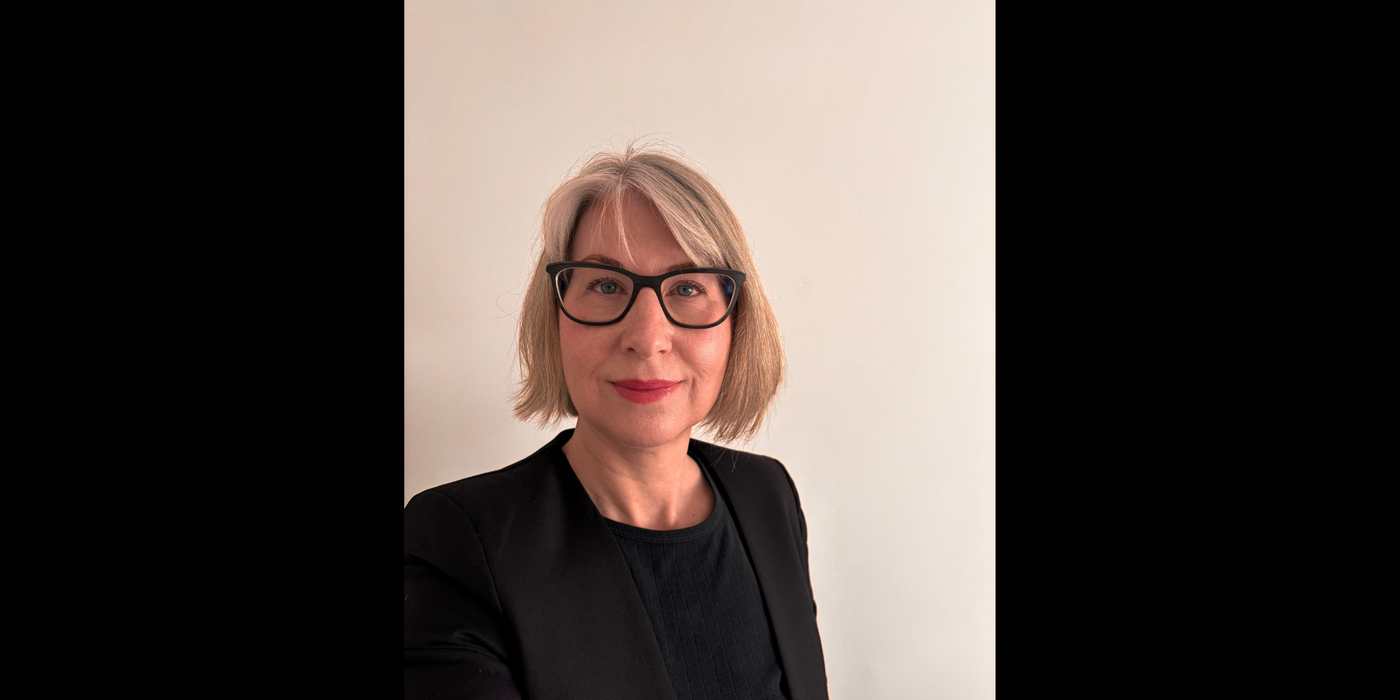 A photograph of the author.
Like many highly driven people, however, slowing down did not seem like the responsible thing to do. Over the course of a few years, I experienced two periods of severe burnout. These experiences forced me to pause and reflect more deeply on questions that are rarely discussed in academic environments: how do we sustain a meaningful and passionate life while navigating the demands of a full and active life? What happens when professional success begins to come at the cost of inner balance?
Recovery from burnout required more than rest. It required a profound recalibration. I had to relearn how to listen to signals I had long felt compelled to ignore—the quiet messages of the body, and the subtle language of the nervous system. Gradually, I came to understand that resilience is not simply about pushing through challenges. In my experience, true resilience arises when the nervous system, the heart, and the mind work in coherence. It requires alignment between who we are inside, what we do, and how we live. In 2025, I made the difficult decision to step away from my full professorship at the National Museum of Denmark. Academic research had been my vocation for decades, and the decision was not easy. Yet even in its difficulty, it felt deeply right. My heart was calling me in a new direction—toward a different kind of work that still revolves around journeys, though now of a more inner and present kind.
Today I work as a reflective advisor and lifestyle coach, supporting highly driven individuals—particularly women—who find themselves experiencing high levels of stress or navigating moments of transition. Many have achieved what society defines as success, yet feel that something essential inside them is asking for a deeper realignment. In my work, I often meet women who have learned to override the signals their bodies continuously send them—to keep pushing, to remain resilient— often at the cost of their own well-being. This is not true resilience, however; it is extraction. My role is to accompany these remarkable women as they reconnect with what I call inner coherence: a way of living and working that aligns the nervous system with one’s deepest values and authentic self. In many ways, this new path feels like a natural continuation of the themes that have guided my research career. The women of the Bronze Age were not static figures in the archaeological record; they were travelers, drivers of change, and key participants in complex social worlds.
We, too, are travelers in our own lives. Sometimes the most important journeys are not those that cross outer landscapes, but those that bring us back into alignment with ourselves. To accompany women on that journey today is both an honor and a profound privilege.
Karin Margarita Frei is the first Professor of Archaeometry in Denmark. She holds a PhD in Archaeometry and an MSc in Geology/Geochemistry from the University of Copenhagen. Her research has pioneered the development of strontium isotope tracing methodologies used to investigate the provenance of raw materials in ancient textiles and to study ancient human mobility, making it possible to reconstruct past journeys and life histories with unprecedented detail, including through the analysis of cremated human remains. Frei has been a pioneer in the study of individual female mobility during the European Bronze Age and has initiated and led major research initiatives, including the Tales of Bronze Age Women project funded by the Carlsberg Foundation.
After many years dedicated to uncovering the journeys of women in the past, she stepped away from her full professorship at the National Museum of Denmark in 2025 to follow a new calling. Following two periods of burnout, she chose to redirect her work toward supporting highly driven individuals—particularly women—who experience high levels of stress or find themselves in moments of inner transition. Today she works as a reflective advisor and lifestyle coach, helping others cultivate what she calls inner coherence: living a passionate and sustainable life in alignment with both the nervous system and the heart. In many ways, her work continues to explore the idea of journeys—now focusing on the inner journeys that shape our lives today. She is also a writer and painter.