Birth
1885
Death
1942
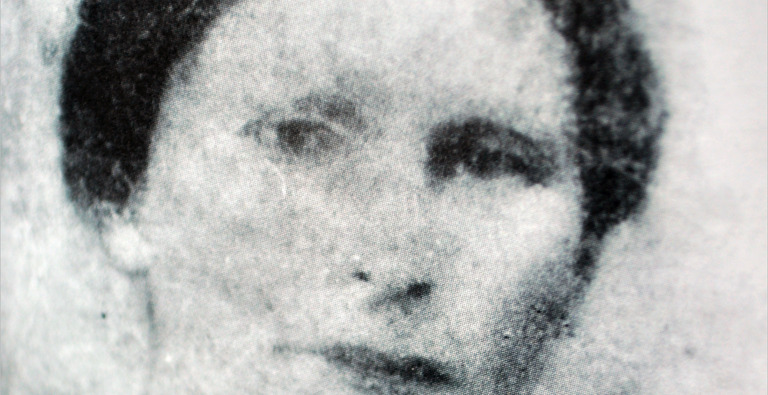
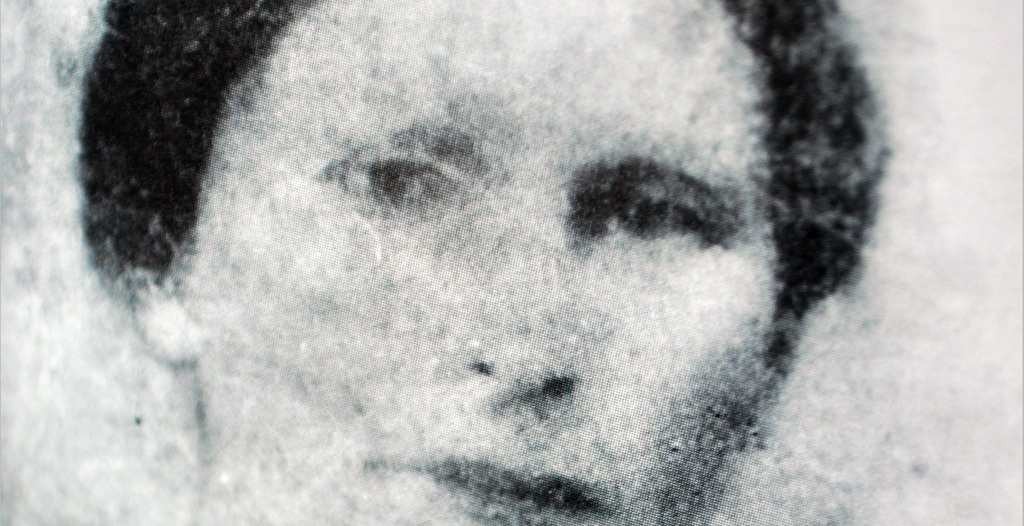
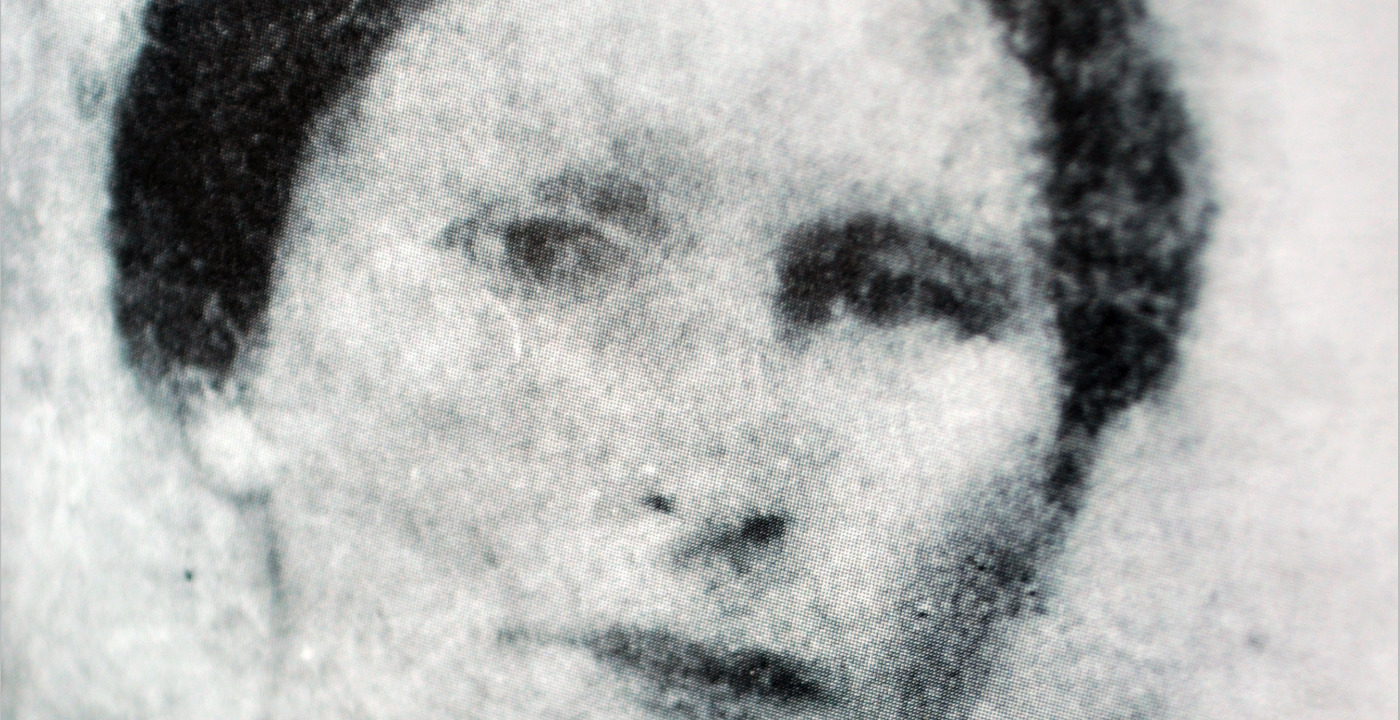
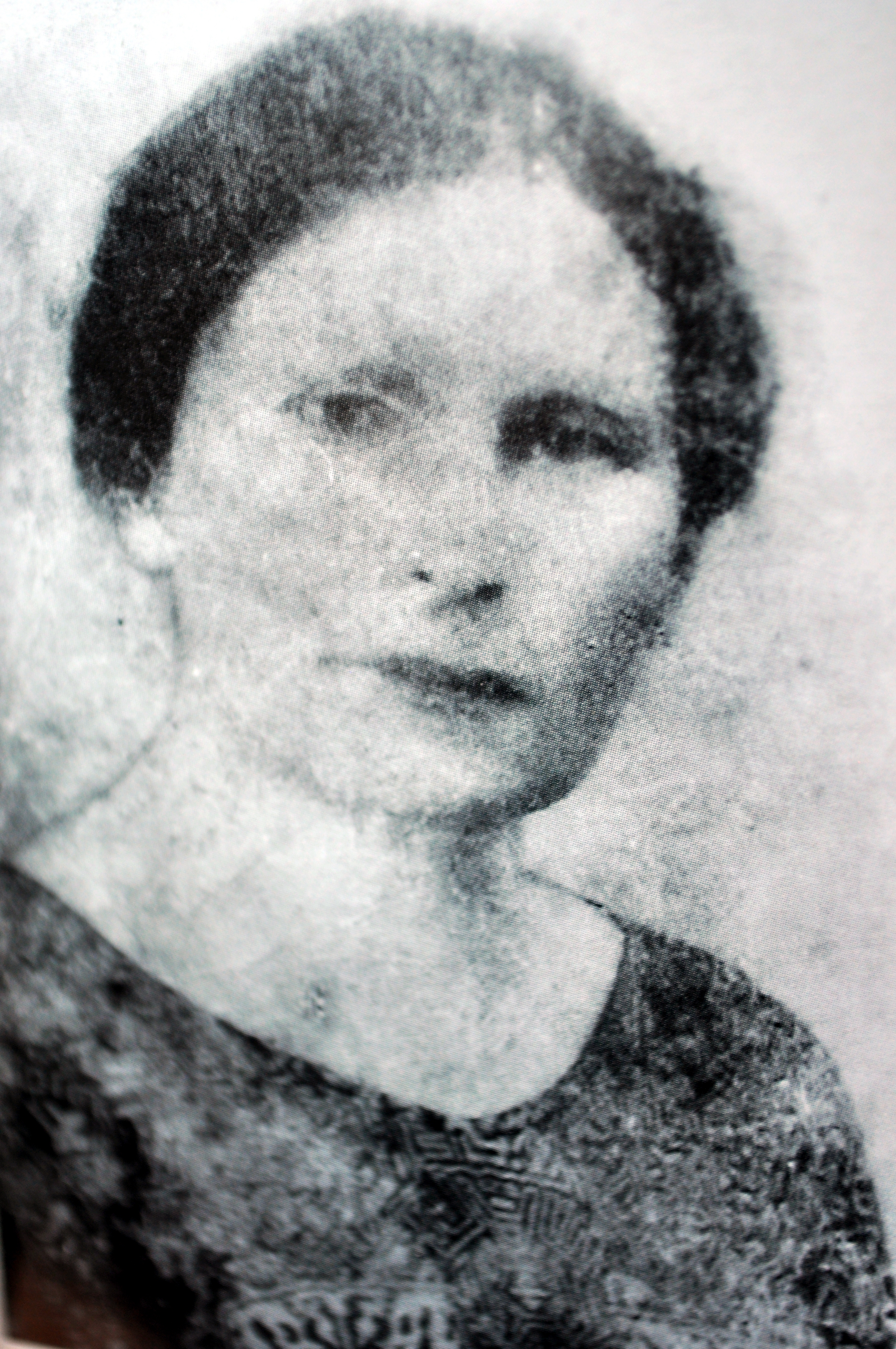
Sabina Spielrein (1885-1942) was a pioneering Russian-Jewish psychoanalyst, child analyst, and theorist whose groundbreaking contributions to developmental psychology, psychoanalysis, and linguistic theory profoundly shaped twentieth-century psychology—although her influence was largely unacknowledged during her lifetime and nearly lost to history after her murder in the Holocaust. Spielrein developed influential theories about aggression, sexuality, language development, and child psychology that anticipated later developments in attachment theory, object relations theory, and cultural-historical psychology. Her ideas directly influenced Freud, Jung, Piaget, Vygotsky, and others, yet systematic erasure of her contributions rendered her work nearly invisible for decades. Rediscovered in the 1970s through archival documents found in Geneva, Spielrein’s legacy reveals both the brilliance of her cross-disciplinary thinking and the gendered mechanisms through which women’s intellectual labor has been appropriated and forgotten.
Personal Information
Name(s)
Sabina Nikolaevna Spielrein; Sabina Sheftel
Date and place of birth
November 7, 1885; Rostov-on-Don, Russian Empire
Date and place of death
August, 1942; Zmiyovskaya Balka (Zmeyevsky gully, “Ravine of the Snakes”), Rostov-on-Don, Russian Soviet Federative Socialist Republic (SFSR), Union of Soviet Socialist Republics (USSR)
Family
Mother: Eva (Khava) Lubinskaya Spielrein (1861-1922)
Father: Nikolai (Naftal) Arkadyavich Spielrein (1863-1938)
Marriage and Family Life
Spouse(s): Pavel Sheftel (1881-1937, m. 1912). Children: Irma Renate (1913-1942), Eva (1926-1942). Siblings: Jan (1887-1938), Isaak (1891-1937), Emilia (1895-1901), Emil (1899-1938).
Education (short version)
MD, University of Zurich, 1911.
Education (longer version)
Spielrein received an exceptional private education in childhood, studying music (especially piano), languages (German, French, Italian, and English in addition to Russian), and science. She graduated with honors from Gymnasium in Rostov-on-Don in 1904. Following psychiatric treatment at the Burghölzli Clinic in Zurich (1904-1905), she enrolled at the University of Zurich’s medical school in 1905, one of the few European universities admitting women at that time. She completed her medical degree (MD) in 1911, successfully defending her dissertation, “Über den psychologischen Inhalt eines Falles von Schizophrenie (Dementia praecox)” (On the Psychological Content of a Case of Schizophrenia), among the first psychoanalytically oriented doctoral dissertations on the newly-coined diagnosis of schizophrenia and the first psychoanalytic dissertation published in a psychoanalytic journal. Her work was supervised by Eugen Bleuler and Carl Jung.
Religion
Judaism
Transformation(s)
Sabina Spielrein’s intellectual ambitions emerged from a confluence of privilege, trauma, and the contradictions of turn-of-the-century Europe. Born into a wealthy Russian-Jewish family that valued education, she received opportunities rare for women of her era—yet these advantages coexisted with familial dysfunction and personal suffering that would become the crucible for her theoretical innovations.
The death of her six-year-old sister Emilia when Spielrein was fifteen marked a pivotal trauma. At nineteen, after graduating from Gymnasium with honors, Spielrein experienced a psychological crisis that led to her hospitalization for “hysteria” at Burghölzli. Her relationship there with Carl Jung—beginning as his first analytic patient and evolving into research collaboration and romantic entanglement—underscores the precarious position of women intellectuals in her day: simultaneously valued for their minds and vulnerable to exploitation.
This experience of being simultaneously patient and intellectual equal—undergoing treatment while also being recognized as possessing a brilliant mind—prefigured her lifelong commitment to understanding mental suffering from both subjective and scientific perspectives.
Spielrein’s transformation from patient to pioneering analyst occurred within institutional spaces that simultaneously enabled and constrained her. The University of Zurich’s rare acceptance of women students allowed her medical education, yet she navigated consistent marginalization. Rather than accepting conventional feminine roles, Spielrein strategically leveraged every opportunity, moving between Zurich, Vienna, Berlin, Geneva, Moscow, and Rostov-on-Don to build networks and establish her authority. She pioneered the integration of personal experience—particularly motherhood—as a legitimate research methodology, revolutionary at a time when women’s domestic lives were dismissed as intellectually irrelevant. By meticulously observing her own daughters and theorizing from maternal knowledge, she challenged assumptions that separated women’s embodied experiences from serious scientific inquiry.
The Russian Revolution initially offered Spielrein expanded opportunities: she chaired the Department of Child Psychology at First Moscow University and led the Russian Psychoanalytic Society during a brief flowering of Soviet psychoanalysis. Yet Stalin’s purges ultimately destroyed this world, leading to the death of her brothers, father, and husband, before the Nazi occupation of Rostov led to her own murder alongside her daughters.
Contemporaneous Network(s)
Carl Gustav Jung (1875-1961): Swiss psychiatrist and psychoanalyst. Jung was Spielrein’s physician at Burghölzli and later her informal analyst, mentor, and research collaborator. Their relationship became increasingly intimate and emotionally complex during Spielrein’s medical studies, causing considerable distress when Jung attempted to end their personal involvement in 1909. Despite this pain, Spielrein maintained professional contact with Jung, who advised her doctoral dissertation. Jung’s later theories drew substantially on ideas they had explored together, including the significance of mythology and religious symbolism in psychological life.
Sigmund Freud (1856-1939): Austrian neurologist and founder of psychoanalysis. After her rupture with Jung, Spielrein initiated correspondence with Freud in 1909, which developed into a professional relationship lasting several years. Freud recognized Spielrein’s theoretical contributions, particularly in his footnote acknowledgment in Beyond the Pleasure Principle (1920) crediting her anticipation of the death drive concept, though his recognition was characteristically ambivalent and insufficient given the extent of her influence on his thinking.
Eugen Bleuler (1857-1939): Swiss psychiatrist and director of the Burghölzli Clinic during Spielrein’s treatment, who later served as one of her dissertation advisors. Bleuler coined the terms “schizophrenia” and “autism.”
Margarethe Hilferding (1871-1942): Austrian physician and psychoanalyst, the first woman admitted to the Vienna Psychoanalytic Society (VPS) in 1910, months before Spielrein became the second in 1911. Hilferding, like Spielrein, focused on child psychology and pedagogy. She died in Theresienstadt concentration camp.
Hermine Hug-Hellmuth (1871-1924): Austrian psychoanalyst and early VPS member who pioneered child analysis alongside Spielrein.
Karl Abraham (1877-1925): German psychoanalyst with whom Spielrein worked during her time in Berlin (1911-1912). Abraham was an important figure in the Berlin Psychoanalytic Society and contributed to early psychoanalytic theory.
Tatiana Rosenthal (1885-1921): Russian physician and psychoanalyst, among the first women admitted to the VPS and a colleague of Spielrein’s in both Berlin and Russia. Rosenthal’s suicide in 1921 deeply affected the Russian psychoanalytic community.
Anna Freud (1895-1982): Austrian-British psychoanalyst, youngest daughter of Sigmund Freud, widely credited as a founder of child psychoanalysis. Anna Freud attended Spielrein’s 1920 presentation at the International Psychoanalytic Congress and published her first article on child psychology in 1922—by which time Spielrein had already published eleven papers on the subject. While Anna Freud developed her own distinctive approach, she was familiar with Spielrein’s earlier work.
Melanie Klein (1882-1960): Austrian-British psychoanalyst whose object relations theory and influential concepts of the “good breast” and “bad breast” were anticipated by Spielrein’s work on ambivalence and the splitting of mental representations. Klein attended Spielrein’s presentations and was familiar with her published work, though she did not acknowledge this influence.
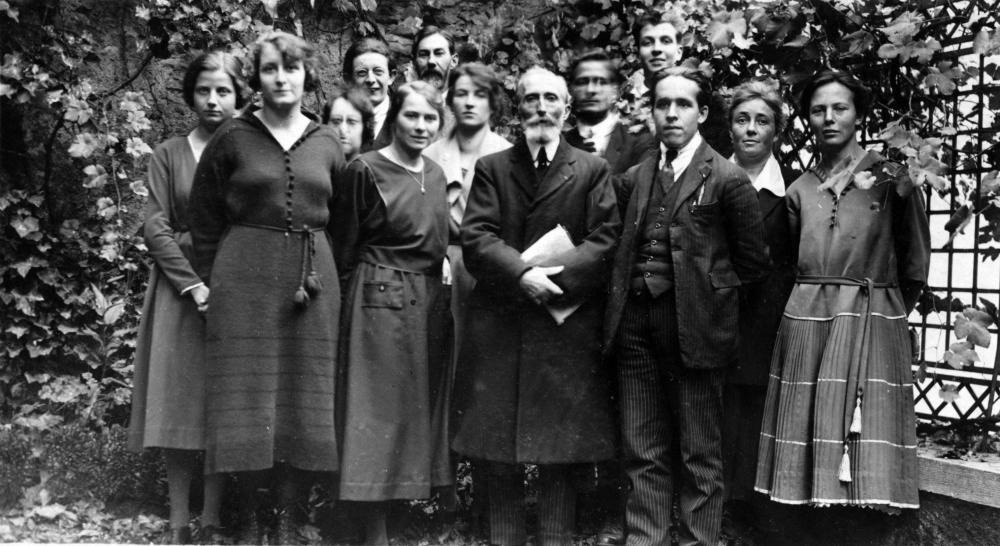
Édouard Claparède (1873-1940): Swiss neurologist, child psychologist, and founder of the Jean-Jacques Rousseau Institute in Geneva, where Spielrein worked from 1920 to 1923. The Institute was a pioneering center for child psychology and education research.
Jean Piaget (1896-1980): Swiss developmental psychologist who worked alongside Spielrein at the Rousseau Institute and underwent analysis with Spielrein for eight months. Spielrein’s theories about language development, symbolic thought, and the relationship between speech and cognition significantly influenced Piaget’s genetic epistemology, though he never credited her contribution. Her ideas about the egocentric nature of children’s thought and its gradual socialization directly prefigured Piaget’s influential developmental stages.
Lev Vygotsky (1896-1934): Russian psychologist and founder of cultural-historical psychology. Vygotsky was a member of the Russian Psychoanalytic Society during Spielrein’s tenure as chair (1923-1924). Spielrein’s presentations on language development, thought, and the social mediation of cognition anticipated core elements of Vygotsky’s later theoretical framework, including the relationship between thought and language and the social origins of higher mental functions. Despite this clear influence, Vygotsky did not acknowledge her work in his published writings.
Alexander Luria (1902-1977): Russian neuropsychologist and founding member of the Russian Psychoanalytic Society while Spielrein served as chair. Luria’s later work on aphasia, neuropsychological development, and the cultural-historical approach bears striking similarities to ideas Spielrein presented during RPS meetings, particularly regarding the development of language and thought. Like Vygotsky, Luria did not credit Spielrein’s influence.
Vera Schmidt (1889-1937): Russian psychoanalyst, pedagogue, and founder of the International Solidarity Children’s Home and Laboratory (Detsky Dom), an experimental Freudo-Marxist kindergarten in Moscow where psychoanalytic principles were applied to early childhood education. Spielrein worked at this institution during her Moscow period (1923-1925), contributing to its innovative curriculum.
Ivan Yermakov (1875-1942): Russian psychoanalyst and founding member of the Russian Psychoanalytic Society, serving as its first president. Yermakov was instrumental in establishing psychoanalysis in Russia and worked with Spielrein during her Moscow period.
Lou Andreas-Salomé (1861-1937): Russian-born psychoanalyst, writer, and intellectual who moved in the same European psychoanalytic circles as Spielrein.
less
Significance
Works/Agency
In 1911, Spielrein successfully defended her doctoral dissertation, On the Psychological Content of a Case of Schizophrenia, the first psychoanalytic dissertation published in a psychoanalytic journal. The paper was revolutionary in its emphasis on symbolic associations in psychotic speech.
Later that year, Spielrein presented her seminal paper, Destruction as the Cause of Becoming, at a meeting of the Vienna Psychoanalytic Society (VPS). This cross-disciplinary presentation established fundamental psychoanalytic principles regarding the relationship between aggression and sexuality, introducing concepts that prefigured Freud’s later theory of the death drive. The paper’s sophisticated integration of biology, mythology, and clinical observation set a new standard for psychoanalytic theorizing, yet its insights were subsequently appropriated by Freud, Jung, and others without adequate attribution.
In 1913, Spielrein published Contributions to Understanding a Child’s Mind, establishing her as a pioneer in child analysis. When her first daughter was born that year, Spielrein revolutionized research methodology by systematically incorporating her own parenting experiences and observations into her work. She emphasized children’s play, formalizing early approaches to play therapy.
In 1920, Spielrein presented On the Question of the Origin and Development of Speech at the 6th International Psychoanalytic Association Congress in The Hague. The audience included Anna Freud, Melanie Klein, and Jean Piaget, all of whom would later develop influential theories building on concepts Spielrein introduced that day.
In 1922, at the IPA Congress in Berlin, Spielrein presented ideas from multiple papers, including The Origins of the Child’s Words ‘Mama’ and ‘Papa,’ which anticipated attachment theory and object relations theory.
In 1923, at a meeting of the Russian Psychoanalytic Society—attended by both Lev Vygotsky and Alexander Luria—Spielrein presented Aphasic and Infantile Thought, presaging core concepts of cultural-historical psychology.
In 1931, Spielrein published her final known work, Children’s Drawings with Eyes Open and Closed, examining the importance of “kinesthetic,” pre-verbal thinking in children’s experience and education.
Reputation
Neither the scope of Spielrein’s influence nor the systematic erasure of her theoretical innovations can be overstated. Spielrein’s extraordinary cross-disciplinary synthesis of psychoanalysis, child analysis, linguistics, evolutionary biology, and clinical attention to women’s and children’s experiences not only prefigured later developments in attachment theory, relational psychoanalysis, child development, and educational psychology, but directly shaped the work of more prominent contemporaries who rarely acknowledged her contributions.
During her lifetime, Spielrein’s work commanded respect, as evidenced by her numerous prestigious appointments throughout Europe: from Burghölzli in Zurich to the Vienna Psychoanalytic Society to the Berlin Psychoanalytic Society to the Rousseau Institute in Geneva to positions of leadership in Moscow’s psychological institutions. Yet this respect often came without explicit recognition of her theoretical originality. Male colleagues—from Jung and Freud to Piaget, Vygotsky, and Luria—built influential frameworks on foundations she had laid, while her name disappeared from their citations and acknowledgments.
Spielrein never ceased researching, publishing, maintaining a clinical practice, and teaching, usually alongside the most famous psychological scientists of the twentieth century: from Bleuler in Zurich to Freud and Jung in Vienna to Abraham in Berlin to Claparède and Piaget in Geneva to Klein and Anna Freud in Britain to Vygotsky and Luria in Moscow. Between 1911 and 1931, at least thirty-seven of Spielrein’s articles appeared in major international journals, written in German, French, and Russian.
In the decades following her murder during the Holocaust, Spielrein’s body of work nearly fell into oblivion. In the mid-1970s, a cache of her documents and diaries was discovered in Geneva, initiating a gradual process of scholarly recovery. However, even since rediscovery, both scholarly and popular attention has disproportionately focused on Spielrein’s relationship with Jung as a young woman and its role in the Freud-Jung rupture, often overshadowing sustained engagement with her theoretical contributions.
Legacy and Influence
In popular culture, Spielrein has too often been reduced to a caricature: a troubled genius whose relationship with Carl Jung supposedly drove a wedge between Jung and Sigmund Freud. This reductive narrative was most prominently portrayed by Keira Knightley in David Cronenberg’s 2011 film A Dangerous Method, which, despite bringing Spielrein to wider attention, centered romantic drama over her intellectual achievements.
Since the 1980s, sustained scholarly efforts have worked to reestablish Spielrein’s theoretical importance and document her complex interpersonal relationships with appropriate nuance. These efforts have produced translations of many major works, particularly into English, making her contributions accessible to contemporary audiences.
The International Association for Spielrein Studies, founded by Adrienne Harris, Klara Naszkowska, and John Launer, continues furthering these efforts and publishing studies of Spielrein’s work. The association maintains a website at: https://www.spielreinstudies.org/.
In 2015, the Sabina Spielrein Memorial Museum opened in Spielrein’s childhood home in Rostov-on-Don, preserving her memory in the city where she lived and worked for her final years and where she was murdered.
less
Controversies
Controversy
The exact nature of Spielrein’s relationship with Jung, especially during her treatment at Burghölzli and the early years of her medical education, remains contested. In her diaries, Spielrein repeatedly referred to “poetry” with Jung, which many scholars interpret as indicating a sexual relationship, though others suggest the term might reference emotional intimacy or fantasy rather than physical consummation. Letters from both parties attest they were romantically involved in some capacity while also conducting research together.
Both Spielrein and Jung confided their feelings to Freud, who later acknowledged that Jung’s choice to act upon his “countertransference” with Spielrein significantly damaged Freud’s opinion of Jung and contributed to the dissolution of their relationship. This controversy has dominated popular and some scholarly accounts of Spielrein’s life, often reducing her to a figure in the Freud-Jung drama rather than recognizing her as an independent intellectual force.
New and Unfolding Information and/or Interpretations
Although significant progress has been made in studying, publishing, and translating Spielrein’s nearly-forgotten work, much of her rediscovered archive remains in private collections in Switzerland and has not yet been published or translated. These materials potentially include additional theoretical writings, clinical notes, correspondence, and personal reflections that could further illuminate her intellectual development and relationships with contemporaries.
New translations and critical editions of Spielrein’s works continue appearing, making her ideas accessible to broader international audiences and enabling more sophisticated analysis of her theoretical frameworks.
less
Bibliography
Primary (selected):
Spielrein, Sabina. Über den psychologischen Inhalt eines Falles von Schizophrenie (Dementia praecox). Jahrbuch für psychoanalytische und psychopathologische Forschungen 3 (1911): 329-400.
Spielrein, Sabina. Die Destruktion als Ursache des Werdens. Jahrbuch für psychoanalytische und psychopathologische Forschungen 4 (1912): 465-503. Published in English as Destruction as the Cause of Coming into Being. Journal of Analytical Psychology 39, no. 2 (1994): 155-186.
Spielrein, Sabina. Beiträge zur Kenntnis der kindlichen Seele. Zentralblatt für Psychoanalyse 3 (1913): 57-72.
Spielrein, Sabina. Die Entstehung der kindlichen Worte Papa und Mama. Imago 8 (1922): 345-367. Published in English as The Origin of the Child's Words 'Papa' and 'Mama.' In A Sabina Spielrein Reader, edited by Rosemarie Akhtar, 183-209. Abingdon: Routledge, 2020.
Spielrein, Sabina. Über die Frage der Entstehung und Entwicklung der Sprache. Imago 6 (1920): 241-262.
Spielrein, Sabina. Kinderzeichnungen bei offenen und geschlossenen Augen. Imago 17 (1931): 359-391. Published in English as Children's Drawings with Eyes Open and Closed. In A Sabina Spielrein Reader, edited by Rosemarie Akhtar, 280-310. Abingdon: Routledge, 2020.
Spielrein, Sabina, and Carl Gustav Jung. The Spielrein-Jung Correspondence, 1908-1919. Edited by Coline Covington and Barbara Wharton. London: Routledge, 2001.
Spielrein, Sabina. Sämtliche Schriften. Edited by Traute Hensch. Freiburg: Kore, 1987.
Spielrein, Sabina. The Essential Spielrein: Her Pioneering Contribution to Psychoanalysis. Edited and translated by Pamela Hanrahan. London: Phoenix Publishing House, 2017.
Spielrein, Sabina. A Sabina Spielrein Reader. Edited by Rosemarie Akhtar. Abingdon: Routledge, 2020.
Secondary (selected):
Akhtar, Rosemarie. Sabina Spielrein and Her Contribution to Psychoanalysis: A Re-Reading. Psychoanalysis and History 23, no. 1 (2021): 80-102.
Carotenuto, Aldo. A Secret Symmetry: Sabina Spielrein Between Jung and Freud. Translated by Arno Pomerans, John Shepley, and Krishna Winston. New York: Pantheon Books, 1982.
Cooper-White, P. & Kelcourse, F. (eds.) (2019), Sabina Spielrein and the Beginnings of Psychoanalysis: Image, Thought, and Language (Routledge).
Covington, Coline, and Barbara Wharton, eds. Sabina Spielrein: Forgotten Pioneer of Psychoanalysis. Hove: Brunner-Routledge, 2003.
Etkind, Alexander. Eros of the Impossible: The History of Psychoanalysis in Russia. Translated by Noah and Maria Rubins. Boulder, CO: Westview Press, 1997.
Feinstein, Mara. The Destruction-and-Creation Dialectic: Jewish Identity and the Reception of Sabina Spielrein's Work. Studies in Gender and Sexuality 15, no. 4 (2014): 245-263.
Harris, Adrienne, and Steven J. Ellman, eds. The Legacy of Sandor Ferenczi: From Ghost to Ancestor. Hillsdale, NJ: Analytic Press, 1996. [Contains material on Spielrein's influence]
Kerr, John. A Most Dangerous Method: The Story of Jung, Freud, and Sabina Spielrein. New York: Alfred A. Knopf, 1993.
Launer, John. Sex Versus Survival: The Life and Ideas of Sabina Spielrein. London: Duckworth Overlook, 2015.
Lothane, Zvi. Tender Love and Transference: Unpublished Letters of C. G. Jung and Sabina Spielrein. International Journal of Psychoanalysis 80, no. 6 (1999): 1189-1204.
Lothane, Zvi. The Deal with the Devil to 'Save' Psychoanalysis in Nazi Germany. Psychoanalytic Review 88, no. 2 (2001): 195-224. [Discusses broader context of persecution]
Miller, Martin A. Freud and the Bolsheviks: Psychoanalysis in Imperial Russia and the Soviet Union. New Haven, CT: Yale University Press, 1998.
Nitzschke, Bernd. Sabina Spielrein: A Pioneer Too Long Forgotten. Spring: A Journal of Archetype and Culture 62 (2000): 191-208.
Richebächer, Sabine. Sabina Spielrein: 'Eine fast grausame Liebe zur Wissenschaft': Biographie. Munich: Deutscher Taschenbuch Verlag, 2005. Published in English as Sabina Spielrein: A Pioneering Psychoanalyst. Translated by Joanne Wieland-Burston. New York: Routledge, 2020.
Roudinesco, Elisabeth. Freud: In His Time and Ours. Translated by Catherine Porter. Cambridge, MA: Harvard University Press, 2016. [Discusses Spielrein's role in early psychoanalysis]
Stanton, Martin. Sandor Ferenczi: Reconsidering Active Intervention. London: Free Association Books, 1991. [Contains material on Spielrein's relationship to Budapest School]
Vidal, Fernando. Piaget Before Piaget. Cambridge, MA: Harvard University Press, 1994. [Discusses Spielrein's influence on Piaget]
Wharton, Barbara. Sabina Spielrein's Contributions to the Study of Language Development. Psychoanalytic Review 87, no. 2 (2000): 207-238.
Zaretsky, Eli. Secrets of the Soul: A Social and Cultural History of Psychoanalysis. New York: Alfred A. Knopf, 2004. [Places Spielrein in broader historical context]
Archival Resources (selected):
Sabina Spielrein Papers. Archives of the History of Swiss Psychology, University of Geneva, Geneva, Switzerland. [Contains correspondence, diaries, and manuscripts discovered in 1977]
Sabina Spielrein Collection. State Archive of Rostov Oblast, Rostov-on-Don, Russia. [Contains materials from her Russian period]
Sigmund Freud Papers. Library of Congress, Washington, DC. [Contains Spielrein-Freud correspondence]
Carl Gustav Jung Papers. ETH-Bibliothek, Zurich, Switzerland. [Contains Jung-Spielrein correspondence]
International Psychoanalytic Association Archives, London, UK. [Contains records of Spielrein's participation in IPA congresses]
Web Resources (selected):
International Association for Spielrein Studies. About Sabina Spielrein. Accessed January 24, 2026. https://www.spielreinstudies.org/.
Jewish Women's Archive. Sabina Spielrein. Accessed January 24, 2026. https://jwa.org/encyclopedia/article/spielrein-sabina.
Museum of Sabina Spielrein. Biography. Accessed January 24, 2026. http://spielrein-museum.ru/en/biography/.
Psychoanalytic Electronic Publishing. Sabina Spielrein - Author Profile. Accessed January 24, 2026. https://pep-web.org/.
University of Geneva Phototheque. Institut Jean-Jacques Rousseau. Accessed January 24, 2026. https://phototheque.unige.ch/.
Issues with the Sources
Aldo Carotenuto's influential 1980 publication of recovered documents emphasized Spielrein's relationship with Jung and her adolescent illness while minimizing her scientific achievements. He situated Spielrein primarily within a triangulated relationship between Jung and Freud, objectifying her by reducing her to details in anonymous case studies. This framework was repeated by scholars and cultural creators, including the 2011 film A Dangerous Method, perpetuating a reductive narrative only recently challenged by thorough scholarly reassessments.
less
Photos
Publication date: Jan 30, 2026
Last updated: Mar 10, 2026
Comment
Your message was sent successfully