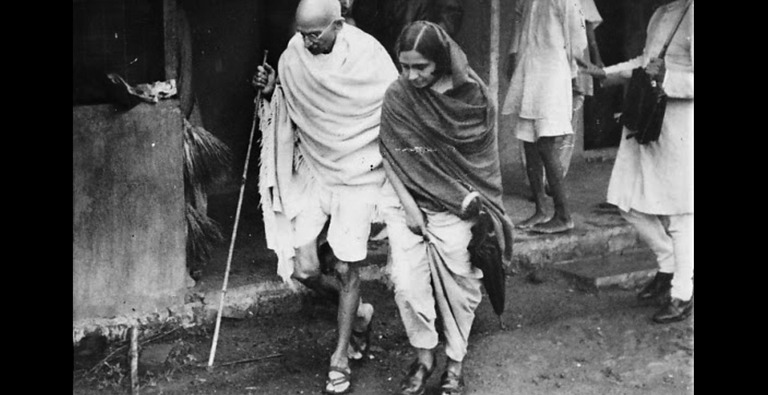
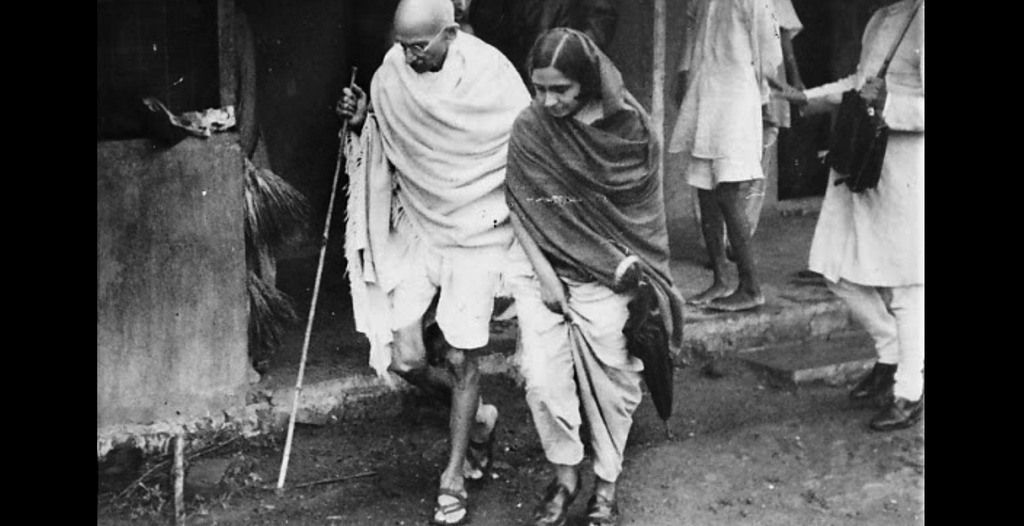
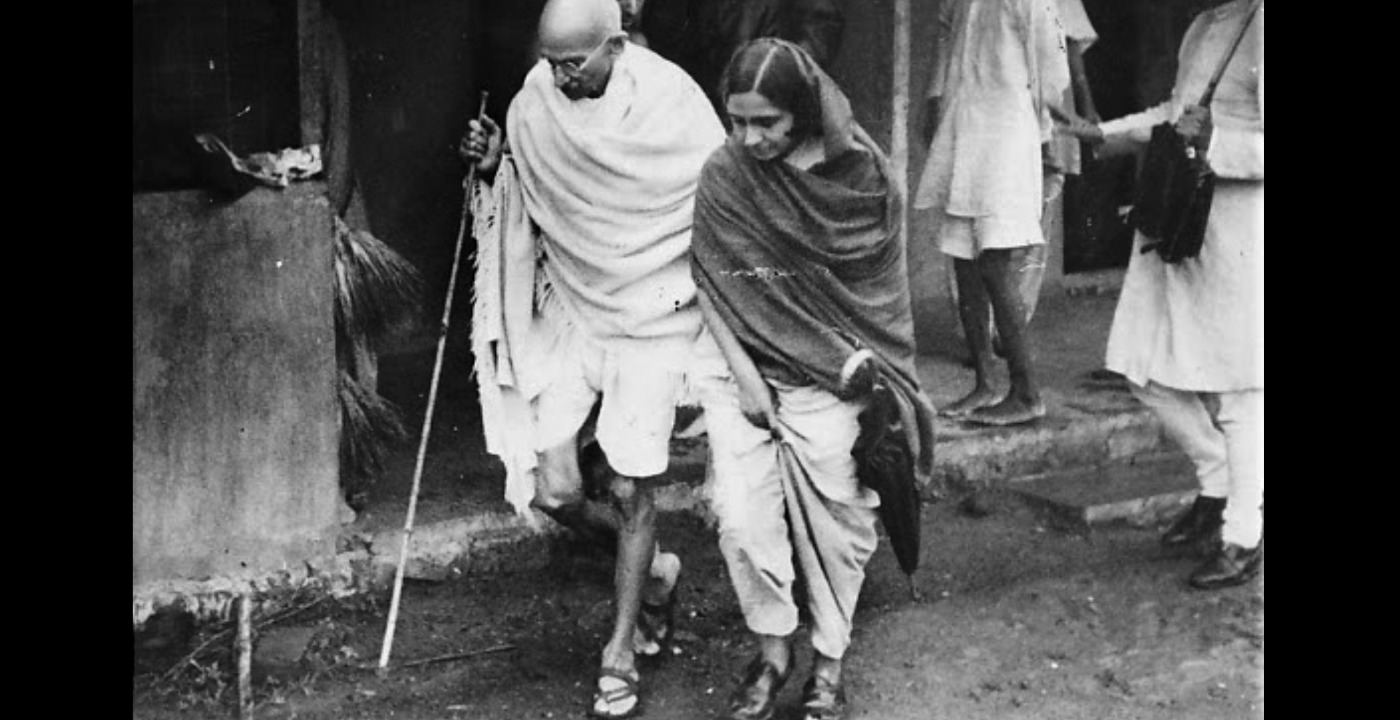
Birth
May 6, 1911
Death
October 26, 1974
Mridula Sarabhai (1911–1974) was a pioneering Indian feminist-nationalist from a prominent Gujarati family with close ties to Gandhi. She dropped out of university to join the 1930 Civil Disobedience Movement and co-founded Jyoti Sangh in 1934 to advance women's rights. She challenged the patriarchal culture within the Indian National Congress, arguing that national independence would not automatically liberate women. After Partition, she worked tirelessly to rescue and rehabilitate abducted women in Punjab. She later faced state persecution for her stance on Kashmir, becoming the first woman imprisoned for dissent in independent India.
Personal Information
Date and place of birth
May 6, 1911, Gujarat, India
Date and place of death
October 26, 1974, Delhi, India
Family
Mother: Sarla Devi Sarabhai, 1896-1975
Father: Ambalal Sarabhai, February 13, 1890-July 13, 1967
Brother: Vikram Sarabhai (August 12, 1919–December 30, 1971), pioneer of India’s space program and regarded as the Father of Indian Space Program. Co-founder of the Indian Institute of Management (IIM), Ahmedabad & Indian Space Research Organisation (ISRO).
Brother: Gautam Sarabhai (March 4, 1917–August 28, 1995), co-founder of the National Institute of Design, India
Sister-in-law: Mrinalini Sarabhai (May 11, 1918–January 21, 2016), eminent Indian classical dancer and choreographer, wife of Vikram Sarabhai
Marriage and Family Life
Unmarried.
Education (short version)
Home-schooled and then enrolled at Gujarat Vidyapeeth, but she dropped out
Education (longer version)
Mridula Sarabhai was first home-schooled by several British and Indian teachers. In 1928, Sarabhai enrolled in Gujarat Vidyapeeth, but to join Gandhi’s salt Satyagraha, she dropped out and entered the mainstream Indian nationalist movement.
Religion
Hindu
Transformation(s)
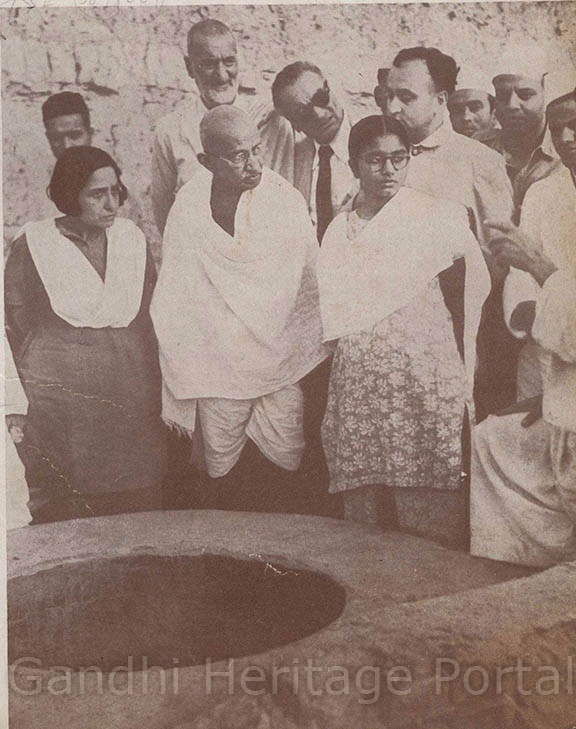
Mridula Sarabhai was a formative feminist-nationalist figure in modern India. Born in an affluent and cultured family of industrialists and nationalists in Gujarat, India, Mridula’s family had close ties with M.K. Gandhi, who was leading the mass movement of India’s independence struggle. Mridula’s mother, Saraladevi Sarabhai, was the President of Videsh Kapda Bahishkar Samiti (Association for the Boycott of Foreign Cloth). The nationalist orientation of the civil society in India left a deep impression on Mridula from a young age. She wholeheartedly committed to the idea of India’s independence, the articulation of human rights, feminist equality, and freedom of speech. Her independence of mind and actions were visible when Mridula dropped out of Gujarat Vidyapeeth to join the 1930 Civil Disobedience Movement. With the assistance of M.K. Gandhi, Mridula was instrumental in setting up Jyoti Sangh in 1934, a social organization which aimed to accelerate the process of creating a nationalist as well as feminist consciousness among people, especially women. Mridula’s feminist assertion of identity remained resonant with her nationalist ideas as she critically analysed the patriarchy embedded within the functioning of the Indian National Congress. In 1934, when the Indian National Congress was organizing elections in Gujarat, they classified women in the same political category as the backwards classes—lower-caste and socially marginalized communities—effectively treating women as second-class citizens rather than equal participants in the political process. She resented this, questioning how women, who had participated in the Civil Disobedience Movement, could be categorised as backwards? In 1936, Mridula protested against the non-inclusion of women in the Congress Working Committee by writing letters to Jawaharlal Nehru, M.K. Gandhi, among others. She also had the women of Congress write letters of protest.
To Vallabh Bhai Patel, she complained that Congress opposes women who are divorced, remarried, or marry men who had previous wives, but no objection is raised against the men who do so. After India’s partition in 1947, Mridula played a significant role in the rescue and rehabilitation of abducted women from Punjab, India. For her monumental contribution to restoring peace and humanity, she was given the sobriquet of Mureed-e-Allah, i.e. a servant of Allah, by the people of Pakistan. For her significant presence and efforts, Mridula was considered for the post of Deputy Home Minister of India with a special emphasis on restoring vulnerable women. Post-independence, Mridula played a critical role in articulating the democratic rights of the Jammu and Kashmir assembly to resolve the issue of Kashmir. She also became the first woman to face legal persecution in independent India for voicing her ideas against the government.
Contemporaneous Network(s)
Mridula Sarabhai was a member of the Shanti Sevak Sangh (Peace Workers Union), Jyoti Sangh, the All India Women’s Conference, and the Indian National Congress.
less
Significance
The absence of Mridula Sarabhai’s political and social legacy left a deep gap that persists within modern political history and in the making of social culture. As Leela Gandhi argues, feminism helps postcolonial theory to create a self-reflexive account of cultural nationalism. It needs to be reiterated that Mridula’s feminist assertions, her individual stances, and her profound contemplation on the social fabric of Indian political mores were well ahead of their time. Unlike many others, men and women, within and outside Congress, Mridula realized that merely by taking part in the Non-Cooperation or Civil Disobedience Movement, women had not gained their individual freedom. The emancipation of the country was not necessarily going to emancipate women. In a letter to Acharya Kripalani, she wrote:
“If India were to gain freedom today, there is no reason to believe that we will not have to launch a battle for allowing women to live as free human beings. The history of Europe shows that women who participated in revolutions shoulder to shoulder with men were relegated back to their homes and to their inferior status once the revolution was over. What reason have we to believe that this will not happen in India? Congressmen elected to assemblies are not there only to take up political questions. Is it not also their duty to fight against social injustice and for equality?” (Basu, 1996, p. 81).
To Gandhi, Mridula wrote:
“Congressmen are not interested in understanding the attitudes and views of women who are taking part in public life. In politics, women stand by the Congress, but it is not sympathetic to their social and economic problems. We are loyal Congresswomen and feel that Congress is the only organization through which our women’s problems can be solved” (Basu, 1996, p. 57).
Mridula Sarabhai’s individualist stances, her oratorical references that encapsulated Europe and India, are evidence of her deep commitment to feminist philosophy that paved the way to create a cultural, political and social pathway for Indian women in the postcolonial period of the twentieth century. For a long time, Mridula’s political legacy has been confined to a ‘social reformer’ or merely as a supporting figure to M.K. Gandhi, stripping Indian women of their intellectual legacy of political agency and feminist autonomy. This needs a comprehensive evaluation and re-inscription in the canon of political thought to appreciate women’s legacy that helped to create new histories.
Works/Agency
Mridula Sarabhai felt that women paid too much attention to their appearance, dress, and jewelry, which made them ‘artificial.’ She tried to eliminate feminine qualities that, according to her, impede women’s progress. These were ‘shyness,’ ‘softness,’ ‘helplessness,’ ‘dependency,’ and ‘lady-like’ manners. Mridula, thus, laid the foundation of a feminist idea of equality that needed a critical rooting within modern Indian society. Mridula did not shy away from voicing her opinions against the gender biased attitudes prevalent within the Indian National Congress and patriarchal interventions that circulated in social space at large. Thus, her political-ideational aim was to disrupt the paternalism inherent within the unwritten protocols of society.
Reputation
Mridula Sarabhai, like other Indian women figures, did not feature as prominently or grandly as her male counterparts in the political-diplomatic discourse of modern Indian history. While Mridula's courage and social work have occasionally been acknowledged–through brief mentions of her role in the communal riots of Ahmedabad (1941) and Meerut (1946), and her efforts to rescue women after Partition–her deeper political and feminist legacy has largely been ignored. Specifically, her challenges to the patriarchal culture within the Indian National Congress, and her fight against the idea that politics was a male domain while women belonged in the private sphere, have yet to receive the recognition they deserve. Mridula shared a warm political relationship with Nehru and Gandhi, yet she did not adhere to the exclusionary tendencies of the internal functioning of the Indian National Congress or the patriarchal societal discriminatory tendencies against women. During the years when Mridula was active in the public domain, she was well recognized by the people and leaders in India. However, history has largely reduced her to a minor footnote, remembered only as a social reformer. This narrow characterization has obscured and undermined the profound impact she had in shaping modern India.
less
Controversies
Mridula Sarabhai’s political and diplomatic interventions in Kashmir during the early years of post-independent India did not feature in the canons of political historiography. Mridula wished to diplomatically resolve the political equation between Jawaharlal Nehru and Sheikh Abdullah to allay the fear local Kashmiris had of interference from the State and Central governments. She continued to provide support to the detained leaders from the J&K Constituent Assembly and wrote in their support. Her actions were considered to be against the interests of public security, which is prejudicial to the State. Hence, Mridula was detained and later faced an externment on entering J&K for four years by the Central government. Thus, Mridula became the first woman to face State persecution in independent India for raising her voice against the dictum of the State. She was labelled a “co-conspirator” in instigating the public sentiment against the rule of the State under the Public Security Act of J&K, barring her from any legal assistance to defend herself.
less
Clusters & Search Terms
Current Identification(s)
Indian Feminist movement, Modern Indian history, Gendered Political History, Women’s Studies
Search Terms
Feminist Nationalist, 20th century, Women in India, Social Reform, Partition, Indian independence movement, Kashmir
less
Bibliography
Primary (selected):
Sarabhai, Mridula. Introduction. “Against the Public Interest? Externment and After.” Legal Defence Funds. NMML Archives. June 3 (1961).
Sarabhai, Mridula. ‘Civil Liberties in Kashmir.’ Letters from CONSTITUTION HOUSE. Part I, Appendix ‘A’, May 27th (1956). Muzaffarabad: Pakistan Herald Press, NMML. Pp. 8-10.
Archival Resources (selected): Basu, Aparna. "Mridula Sarabhai: Rebel with a cause." OUP Catalogue (2003).
Web Resources (selected):
https://amritmahotsav.nic.in/district-reopsitory-detail.htm?12404
less
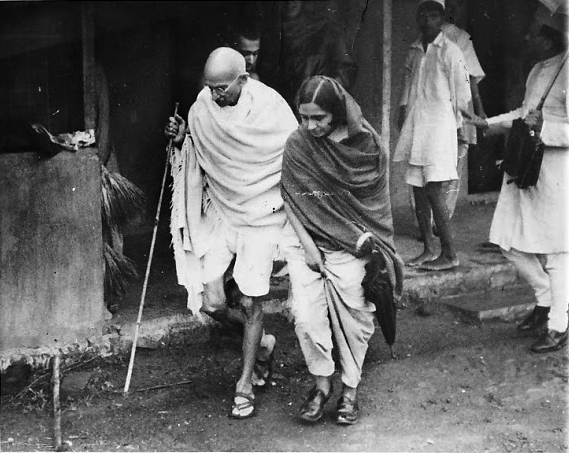
Photos
Publication date: May 25, 2026
Last updated: Aug 6, 2026
Comment
Your message was sent successfully