Birth
1866
Death
1933
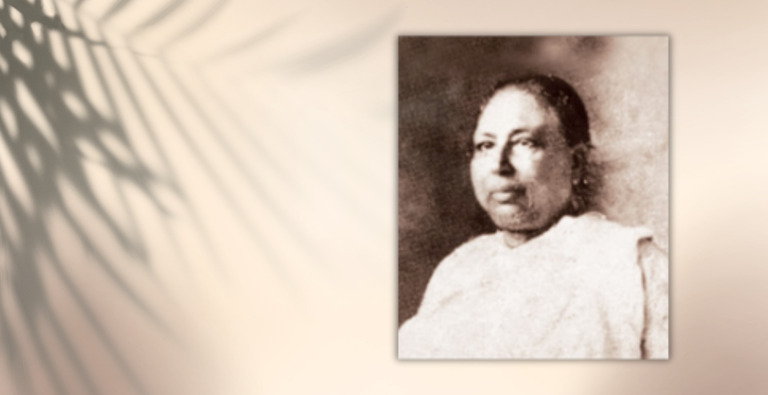
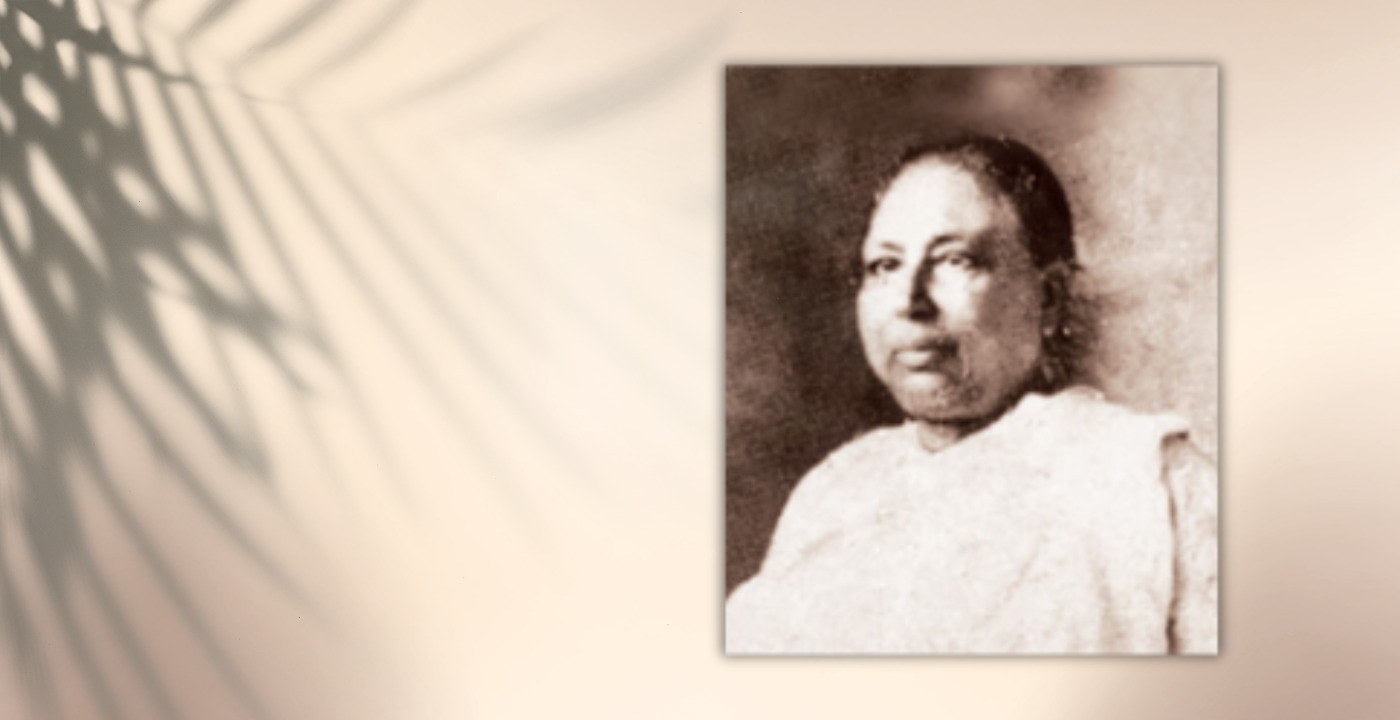
Haimabati Sen (c. 1866–1933) was one of India’s earliest women physicians and a pioneering memoirist whose comprehensive account of her own life documented the systematic oppression faced by savarna Hindu widows in colonial Bengal. Born into an affluent kulin (elite) Kayastha family in the Khulna district of former East Bengal, now Bangladesh, she became a child widow at the age of ten, remarried as an adult, and obtained medical training at Campbell Medical School in Calcutta. Sen worked as the Lady Doctor at Hughli Dufferin Women’s Hospital and maintained a private practice while raising five biological children and adopting over four hundred children whose mothers had died in her hospital or been abandoned. Her memoir, written in Bengali in the 1920s and 1930s, provides an unflinching and intimate account of child marriage, customs of widowhood, sexual violence, marital rape, professional challenges, and the complex negotiations of patriarchal oppression by a pioneering professional woman in colonial India.
Personal Information
Name(s)
She was born as Haimabati Ghosh and later became known as Haimabati Sen after remarriage. In her childhood, she was affectionately called “Chuni babu” by her father, meaning “Little Mister Chuni,” and he insisted that the other family members refrain from treating or addressing her as a girl.
Date and place of birth
She was born around 1866 in the Khulna district of the erstwhile East Bengal, now Bangladesh.
Date and place of death
She died of breast cancer in May 1933, most likely in Calcutta or Chinsurah. The memoir does not record her illness or medical treatment, and only a young grandchild remembered her final months, leaving the details sparse.
Family
Mother: Her mother’s name is not recorded in the memoir. At the time of her birth, her mother felt devastated that her first child was a girl and entrusted the infant to a Dalit woman of the Hari caste, a gesture that epitomised the devaluation of daughters in her milieu. The mother upheld traditional practices of gauridaan (early marriage of prepubescent Hindu girls in colonial Bengal), and, under the advice of Haimabati’s grandmothers, arranged the nine-and-a-half-year-old Haimabati’s marriage to a forty-five-year-old groom against Haimabati’s father’s wishes.
Father: Haimabati’s father, Prasannakumar Ghosh, was an affluent zamindar of the kulin kayastha caste. He celebrated Haimabati’s birth, insisted that she be treated as a boy, and encouraged her education by dressing her in boys’ clothes and arranging for her to study with her male cousins in the outer courtyard of the house. After the death of Haimabati’s first husband, he attempted to secure her financial independence but died suddenly before those arrangements could be completed, leaving her legally vulnerable and deeply bereaved. In her memoir, she remembered him as the only person who had consistently acted as her friend and well-wisher.
Marriage and Family Life
Her first marriage took place in 1876, when she was about nine and a half years old. It was to a forty-five-year-old Deputy Magistrate in Jessore who had been widowed twice, and had two daughters almost Haimabati’s age. This marriage violated the 1860 law, which had set the minimum Age of Consent as ten for consummation of marriage. Her husband was a debauchee who regularly brought prostitutes into their home and attempted sexual intercourse with his child-bride. Within a year, he died of pneumonia and a liver abscess, and she was left a virgin child widow at the age of ten. It was implied that her remarriage was possible only because she had no children with her first husband.
Her second marriage took place in 1889, when she was twenty-three years old. She married Kunja Behari Sen, a Brahmo missionary from the Midnapore district in present-day West Bengal, India. He was initially employed as the manager of the Mission Press, but either resigned or was dismissed shortly after the marriage, and Haimabati implied that he faced criticism for marrying a widow. Kunja Behari never held full-time employment again and devoted himself instead to famine relief and spiritual concerns, while Haimabati gradually became the primary financial provider of the family. She later wrote that, despite substantial debts, her husband shifted the burden of worry onto her, along with the responsibilities of repayment and domestic management. Kunja Behari died in 1902 from diabetes related complications, leaving Haimabati widowed for a second time and with no secure family support. Her youngest child was six months old at the time.
During her second marriage, she gave birth to five children who survived: four sons, including Dr. Atamajyoti Sen, who later preserved her memoir, and one daughter. She also suffered one stillbirth and one miscarriage. Over the course of her working life, she took in more than four hundred orphans, beginning with infants whose mothers died in her hospital and later including unwanted babies, abandoned children, and child widows who had nowhere else to go. In her last years, she supported her daughter, an adopted daughter, their children, an unemployed son and his family, her younger sister, and various other relatives from her husband’s family.
She had at least two siblings. She mentioned a younger sister, whose name is not recorded but who later depended on her financially, and a profligate brother who squandered their father's property and cheated her out of her jewellery, reducing her to a condition of near penury.
Education (short version)
As a child, she learned to read and write informally by listening to and joining the lessons of her male cousins in the outer courtyard of the family home. Her father later arranged for a private tutor to teach her despite the protest of older female relatives who opposed girls’ education. After she became a widow, she worked as a teacher in Banaras and rural East Bengal while continuing to educate herself. In 1891, she entered Campbell Medical School in Calcutta and, in 1894, she graduated with the Vernacular Licentiate in Medicine and Surgery (VLMS) degree, First in her class and qualifying for the gold medal, which she was compelled to relinquish after intense protest by male students.
Education (longer version)
During her childhood, Haimabati's education took place in an environment that simultaneously challenged and reinforced gender norms. Her father permitted her to wear boys' clothes and attend lessons with her male cousins in the outer courtyard, which was noticeably a public arena. He hired a male teacher to provide her with formal instruction in the letters at a time when female education in Bengal remained controversial. Nevertheless, this support lasted only a few years, and before she turned ten, the older women of the household insisted on arranging her marriage out of the fear that a girl with any more education would have to remain a spinster the rest of her life. In this way, her early schooling was cut short.
Following her father's death and her increasing financial insecurity after her second widowhood, she travelled to Banaras, where she accepted a position as a teacher in a girls' school. She lived under extreme austerity, sometimes surviving on only a few handfuls of rice. Her desire for education led her to journey to Calcutta with letters of introduction to prominent Brahmo Samaj leaders such as Durgamohan Das and Sibnath Sastri. Her conversion to Brahmoism signalled an implicit rejection of brahmanical Hinduism and its oppressive gender norms. After her remarriage at twenty-three, she began to pursue medical education with greater determination.
At the age of twenty-six, she entered the Campbell Medical School in 1891. The Campbell Medical School offered the VLMS and was more accessible to Indian women than Calcutta Medical College because it did not require knowledge of English; classes were taught in Bengali by Indian instructors. Her classmates included pioneering women such as Kadambini Banerji, later Ganguly and Idennesa Bibi, the first Muslim woman to study medicine in Bengal.
Haimabati distinguished herself academically, standing first in a mixed class and surpassing the top male candidate by half a mark. This achievement entitled her to the gold medal, but it triggered a fierce backlash from her male peers, who went on a strike and attacked the carriage in which the women travelled, with stones and bricks. Sections of the public supported the male agitators, and at least one newspaper letter suggested that the problem would be solved if the “girl” were killed. Under pressure from petitions to colonial authorities, she was persuaded to relinquish her claim to the gold medal in exchange for silver medals and a monthly scholarship of thirty rupees.
Religion
She was born into a Hindu Kulin Kayastha family in Bengal. As an adult widow, she chose to convert to the Brahmo Samaj, a decision that she and later commentators understood as an implicit repudiation of brahminical Hinduism and its gendered tyrannies.
Transformation(s)
At least three pivotal events shaped Haimabati Sen's life and her evolving understanding of gender, power, and justice.
The first transformative event was her father's sudden death. His death removed the only person who had consistently championed her education and well-being and plunged her into financial dependency on unsympathetic, mercenary relatives. She realised that although she nominally had the right to her husband's property, in practice, she had little control over it and was almost a dependent slave in her in-laws’ household.
The second formative experience unfolded during her years in Banaras, long mythologised as a sanctuary for widows, but which proved instead to be a site of systematic sexual harassment. A cousin's wife refused her shelter on the explicit grounds that a young widow living near a male cousin would attract scandal. She encountered a pregnant young widow who had been expelled from a Brahmo widows’ shelter after being seduced and abandoned. This experience convinced her that the world operated according to one law for men and a very different law for women.
The third kind of transformation arose from her recognition that education could provide a path to economic independence and professional identity. In the late 19th-century Bengal, for a woman to pursue formal education was to mount a direct challenge to patriarchy. She faced hostility from many quarters, yet she persevered, driven by an ambition to study and do “some prestigious work.” Throughout the memoir, she returned repeatedly to questions about whether she was made to endure so much simply because she was a woman.
Contemporaneous Network(s)
Over the course of her life, Haimabati built extensive networks of support by creating what Geraldine Forbes called her “fictive kin,” addressing sympathetic strangers as mother, father, uncle, aunt, sister, or brother. Her network included leading figures in the Braham Samaj such as Durgamohan Das, Sibnath Sastri, and Devendranath Tagore, who helped secure her appointment at Hooghly Dufferin Women's Hospital. At Campbell Medical School, she studied alongside early women physicians, including Kadambini Banerji and Idennesa Bibi.
A striking theme in her memoir is the solidarity she received from women across class, caste, and regional divides. During her travels, she was repeatedly helped by other women who offered her food, shelter, and moral support. Scholars have interpreted this “network of womanly sympathy and support” as carrying an unspoken critique of patriarchy in which women recognised one another as fellow sufferers under male dominance (Sen 2012).
less
Significance
Works/Agency
- “Because I am a woman”: A child widow’s memoirs from colonial India. (posthumous publication: 2011)
Reputation
During her lifetime, Haimabati was regarded locally as a dedicated lady doctor serving Chinsurah and the surrounding districts, but she did not achieve widespread fame. The most public moment of visibility in her life came with the gold medal controversy at the Campbell Medical School, which provoked debate about women’s education and the limits of British liberalism.
Her memoir circulated privately within her family for decades after her death. In the 1990s, her granddaughter, Mrs. Namita De, shared the manuscript with historian Geraldine Forbes. The work was eventually translated by Tapan Raychaudhuri and edited by both Raychaudhuri and Forbes before publication in 2011, after which it gained recognition as an extraordinary historical documentation of colonial India and a landmark in Indian women's life writing.
Today, Haimabati Sen’s memoir is recognised as a foundational text in the tradition of South Asian women's life writing. Scholars like Kavitha Rao have called her “a fighter,” and she is frequently cited as one of the feminist foremothers of Indian women in STEM. Her unprecedented candour in addressing questions of sexuality, abuse, marital rape, and structural violence against women has been recognised by almost every scholar who has assessed her memoir.
less
Controversies
Controversy
The most prominent controversy in Haimabati Sen’s life centered on her academic success at Campbell Medical School. When she outperformed the highest-scoring male student in the early 1890s, she became eligible for the gold medal, an unprecedented honor for a Bengali woman in those times. Her male classmates responded with open rebellion, going on strike and attacking the women students’ carriages. Public opinion largely sided with the striking men, and newspapers published letters voicing deep resentment; one letter notoriously suggested that the problem would be solved if the girl were killed. Rather than defend the principle of merit, the colonial authorities persuaded Haimabati to relinquish her claim to the gold medal in exchange for silver medals and a scholarship.
A further morally fraught episode involved the death of an eleven-year-old girl patient from marital rape, which occurred after the 1891 Age of Consent Act made consummation before the age of twelve a criminal offence. Haimabati was pressured to accept a bribe of 500 rupees to cover up the death. She initially refused but was bullied into taking the money under the threat of being fired. She later worried more about concealing the money from her husband than about the ethical implications, a detail that has been read as evidence of how deeply a husband’s authority can be internalised.
less
Bibliography
Primary (selected):
Forbes, Geraldine. 2011. “Introduction”. In Because I Am a Woman: A Child Widow’s Memoirs from Colonial India, by Haimabati Sen, translated by Tapan Raychaudhuri, edited by Geraldine Forbes and Tapan Raychaudhuri, ix-xxii. New Delhi: Chronicle Books.
Forbes, Geraldine. 2006. “Negotiating Modernities: The Public and Private Worlds of Dr. Haimabati Sen”. In Rhetoric and Reality: Gender and Colonial Experience in South Asia, edited by Avril Powell and Siobhan Lamber-Hurley. New Delhi: Oxford University Press.
Sen, Haimabati, 2011. Unnamed Memoir Manuscript in Bengali, 1920s-early 1930s. Translated by Tapan Raychaudhuri as Because I Am a Woman: A Child Widow’s Memoirs from Colonial India. Edited by Geraldine Forbes and Tapan Raychaudhuri. New Delhi: Chronicle Books.
Web Resources (selected):
Rao, Kavitha. 2021. “The Fighter: Haimabati Sen”. In Lady Doctors: The Untold Stories of India’s First Women in Medicine. Chennai: Westland Books. https://www.amazon.in/Lady-Doctors-Untold-Stories-Medicine/dp/9390679052?asin=B0BN5H3Q24&revisionId=4ec0da6e&format=3&depth=1
Sen, Indrani. 2012. Resisting Patriarchy: Complexities and Conflicts in the Memoir of Haimabati Sen.” Economic and Political Weekly 47, no. 12 (2012): 55–62. http://www.jstor.org/stable/23214502.
Issues with the Sources
The original Bengali manuscript of Haimabati Sen’s memoir remains unpublished and is held privately by the Sen family. All citations in this schema referred to the 2011 English translation. Researchers do not have access to the Bengali manuscript, which might affect the ability to verify translation choices or access passages not included in the published edition. Also, Kavitha Rao’s marketing of the stories of women physicians of India as untold seems to be a marketing gimmick as extensive work on Haimabati’s life has already been done by Geraldine Forbes.
Comment
Your message was sent successfully