Birth
ca. 306 CE
Death
ca. 370 CE
Faltonia Betitia Proba (c. 306–370 CE) was a Roman aristocrat and Christian poet born into a powerful senatorial family in Rome. Educated in classical literature, especially Virgil, she later redirected her literary training toward Christian theology. Her surviving work, the Cento Vergilianus de laudibus Christi, is a 694-line poem composed entirely from Virgilian verses, retelling the Christian salvation narrative from Genesis to Christ’s Ascension. Often identified as the earliest known female Christian Latin poet, Proba reworked a canonical pagan epic tradition into a vehicle for Christian teaching. Her work circulated widely, shaped later Christian writers, and remained influential throughout the Middle Ages and beyond.
Personal Information
Name(s)
Faltonia Betitia Proba
Date and Place of Birth
Born c. 306 CE, most likely in Rome, into an aristocratic senatorial family with strong connections to imperial power
Date and Place of Death
Died c. 370 CE, possibly in Rome
Family
Mother: Unknown
Father: Petronius Probianus, who served as urban prefect and consul (322 CE), and was descended from a prestigious line of senators and imperial administrators.
Marriage and Family Life
Proba was married to Clodius Celsinus Adelphus, a senator who served as urban prefect of Rome (351 CE). She had two sons: Quintus Clodius Hermogenianus Olybrius and Faltonius Probus Alypius, continuing the lineage of her influential aristocratic family. Her father, grandfather (Pompeius Probus) and brother (Petronius Pobanus) all held the office of Consul in Rome, as did her son, Olybrius.
Proba was part of a powerful familial network and a prominent Christian aristocratic house. These connections are critical for understanding the socio-political backdrop of her writing and her position as a woman navigating both elite and Christian spheres of influence.
Her granddaughter, Anicia Faltonia Proba (born around 350 CE), was also a prominent Christian and received correspondence from important theologians of her day, Augustine of Hippo (354–430) and John Chrysostom ( c. 347–407); Jerome (c. 342–420) tells us that Anicia Proba had to flee to Africa with her daughter-in-law Anicia Iuliana and granddaughter Demetrias when Rome was sacked in 410 CE.
Education (short version)
As a woman of the Roman elite, Proba received a thorough education in classical literature, including Virgil, and later reoriented her literary talents toward Christian theological expression through the Latin epic tradition.
Education (longer version)
Proba’s sophisticated literary education was characteristic of elite Roman girls in the 4th century CE, especially in senatorial households. She was trained in classical poetics and rhetoric, likely with access to a wide range of texts. Her command of Virgilian verse and her methodical rearrangement of his lines in her Virgilian Cento on the Glories of Christ (Cento Vergilianus de laudibus Christi) demonstrates not only technical expertise but also an interpretive creativity that retools male-dominated literary forms for theological and didactic purposes. Proba's education enabled her to challenge conventional narratives by repurposing the epic tradition for Christian storytelling.
Religion
Christian. Proba is often credited as the earliest known female Christian Latin poet. Her conversion from paganism is hinted at in her cento, which marks her as emblematic of the cultural transitions of the Constantinian age. Her works actively participate in Christian didactic and theological discourses, especially through her re-imagining of classical texts within a Christian teleology.
Transformation(s)
Proba redefined Roman literary tradition by appropriating the epic form, which had long been a bastion of male authority, to articulate a Christian narrative that centers on salvation, virtue, and divine power. Her Cento is a transformative text that disrupts canonical boundaries: by extracting lines from Virgil, a symbol of pagan literary greatness, she constructs a sacred history that culminates in the life of Christ. This act of cultural and theological re-signification marks a radical intervention into the literary canon. As the New Historia project emphasizes, Proba embodies how women restructure systems of power through cultural production.
Contemporaneous Network(s)
Proba operated within the Christian elite of 4th-century Rome. Her family’s influence included connections to emperors and high-ranking officials, which positioned her to engage in theological discourse at a time when Christianity was reshaping the Roman world. Her cento may have been intended for both devotional and educational purposes, possibly read within elite Christian households. Scholars have speculated about her impact on Christian thinkers like Jerome and Ambrose: the former criticised women for teaching scriptures to men in a passage that appears to reference Proba’s cento (Letter 53.7). The literary and spiritual circles of late antique Rome formed the backdrop for her bold reworking of classical tradition.
less
Significance
Works/Agency
Proba’s surviving work is the Cento Vergilianus de laudibus Christi (Virgilian Cento on the Glories of Christ). The Cento retells the Christian salvation narrative, from Genesis to Christ’s Ascension. The cento is a ‘patchwork,’ a poem of 694 lines composed using lines from Virgil's works, chiefly the Aeneid, but also from the Georgics and Eclogues.
Proba states in this poem that ‘long ago’ she had written another poem, now lost, on a civil war. A manuscript, seen by de Montfaucon in 1697 but now also lost, tells us that this work was on the war between Constantius II and Magnentius (350-353).
Proba’s poetic agency lies in her ability to transform a canonical, masculine, and pagan voice into a medium for Christian storytelling. The cento form, while not original to her, becomes a space of innovation under her pen. She manipulates Virgilian verses to construct a coherent and orthodox theology. Theological precision, narrative logic, and stylistic cohesion in the Cento reflect both literary skill and religious commitment. Her cento functions as a new kind of scriptural exegesis and poetic proclamation.
Contemporaneous Identifications
Proba was known to Christian writers of the 4th and 5th centuries. Damasus, who was both Pope (in office 366–84) and a poet, imitated her work. A preface to her work (not written by her) includes a dedication to the Roman emperor Arcadius (reigned 377–408) who had, it seems, requested a copy of the text. The preface speaks of Arcadius reading and re-reading the text and passing it on to his son. This son, Theodosius II (who reigned 402-450) married Aelia Eudocia, who was also a poet. She composed her own biblical cento, among other works, perhaps directly inspired by the work of Proba.
In Letter 53.7, Jerome criticises ‘a garrulous old woman’ in the context of using Virgil’s work for Christian purposes: this has been read as reference to Proba’s work. Later Christian scholars cited her work as an example of pious and orthodox poetry, and she was included in medieval manuscript traditions of Christian writers.
Reputation
Proba’s reputation fluctuated over time. In antiquity, she was admired for her ingenuity and faith. Isidore of Seville (c. 560-636), in his work On Famous Men, praised Proba for her cleverness and identified her as, ‘the only woman included in the men of the Church.’ In the Middle Ages, she was celebrated as a model of Christian erudition and was one of the few women included in manuscript collections of important authors. More than one hundred manuscripts of her Cento are known from the Middle Ages. Renaissance humanists rediscovered her work with mixed reactions: some praised her classical skill; others viewed the cento form as inferior to original poetry. Petrarch, writing to the Empress Anna (in the 14th century) includes Proba with Sappho in his list of the great women of literature. Boccaccio wrote a biography of her in his On Famous Women (De claris mulieribus 1362-75, considered the first collection of women’s biographies), praising her literary knowledge and remarkable skill in recomposing the works of Virgil to retell episodes from the Bible. Christine de Pizan (1402) has high praise for Proba’s intelligence, knowledge and skill, noting in particular, that ‘the work she created was so masterful that no man could match it.’
Modern scholarship has renewed interest in her as a pioneering Christian author who reclaims classical language for Christian purpose. Her inclusion in The New Historia marks her as a figure of cultural transition and female authorship.
Legacy and Influence
Proba’s legacy rests on her capacity to navigate and reshape the male-dominated literary world. She transformed a deeply patriarchal cultural inheritance into a vehicle for female theological voice. Her Cento not only provided a vernacular pathway into Christian doctrine for literate elites, but also served as a model for later female writers in both Latin and vernacular traditions. Her work can be considered an early example of feminist appropriation, where subversion occurs through mastery and adaption rather than rebellion.
less
Controversies
Controversy
One of the major controversies surrounding Proba is whether the Cento should be understood primarily as a devotional work or as a literary exercise. Some critics, especially in earlier modern periods, dismissed the cento technique as derivative or lacking originality. It has also been viewed as a ‘school text’, written as a vehicle for Christian teaching to persist under the pagan emperor Julian (Amatucci 1955; Green 1995). Such views do not give sufficient credit to the work’s creativity and focus on a possible use for the poem that confines the poetic purpose to a school room in a way that a male authored text may not be: we can compare such a reading with views on the purpose of Virgil’s work, which was widely used in classrooms, but has never been considered to have been written for that purpose.
Others have noted that Proba’s theological choices, such as her decision to describe Christ’s crucifixion on an oak tree rather than on a cross, suggest an intentional reinterpretation of Christian themes, possibly reflecting a unique spiritual vision and a synthesis of Roman, Christian and Jewish ideas. Debates also exist over the dating and nature of her non-surviving work, the Constantius-Magnentius war poem.
A further point of controversy concerns the authorship of her cento itself. Shanzer (1986) argues that Proba’s granddaughter, Anicia Faltonia Proba, should be identified as the author of the cento. The consensus of modern scholarship follows Isidore of Seville in attributing the work to Faltonia Betitia Proba.
New and Unfolding Information and/or Interpretations
Recent scholarship explores Proba’s work as a gendered intervention into classical and theological tradition. The cento form, far from being merely imitative, emerges as a powerful feminist strategy. By recasting Virgil’s words, Proba asserts female authority in theological discourse. Her work has also been re-evaluated in terms of its pedagogical purpose or use, as a text designed for elite Christian women learning both Latin literature and scriptural content. Proba’s Cento has become central to conversations about authorship, intertextuality, and female agency in late antiquity.
less
Bibliography
Primary Sources
- Fassina A. and Lucarini, C. M. (eds) Faltonia Betitia Proba: Cento Vergilianus. De Gruyter, 2015 (Latin text).
- Codex Mutinensis in de Montfaucon, B. 1702, Diarium Italicum. Apud Joannem Anisson (Paris), 36.
- Christine de Pizan (1402), The Book of the City of Ladies 29.
- Isidore of Seville, De Viris Illustribus 18.22; Etymologiarum 1.39.26.
- Jerome, Letters 53.7 and 130.3.
- Petrarch, Letters on Familiar Matters 21.8.6
- Boccaccio, On Famous Women 97
For Anicia Faltonia Proba (granddaughter)
- Augustine, Letters 130, 131, 150
- John Chrysostom Letters 168
- Jerome, Letter 130
- Procopius, History of the Wars 3.2.27
- CIL VI, 1754
Secondary Sources
- Amatucci A. G. (1955), Storia delta Letteratura Latina Cristiana. Società Editrice Internazionale.
- Cullhed, S. S. (2015), Proba the Prophet: The Christian Virgilian Cento of Faltonia Betitia Proba. Brill. [includes text and translation]
- Green, R. P. H. (1995), "Proba's Cento: Its Date, Purpose, and Reception." The Classical Quarterly 45 (2): 551–563.
- Cameron, A. (2011), The Last Pagans of Rome. Oxford University Press.
- Plant, I. (2004), ‘Proba.’ Women Writers of Ancient Greece and Rome: An Anthology. University of Oklahoma Press, 171–187. [includes translation]
- Shanzer, D. (1986), ‘The Anonymous carmen contra paganos and the Date and Identity of the Centonist Proba.’ Revue des Études Augustiniennes 32 (3–4): 232–48.
- 1. Proba
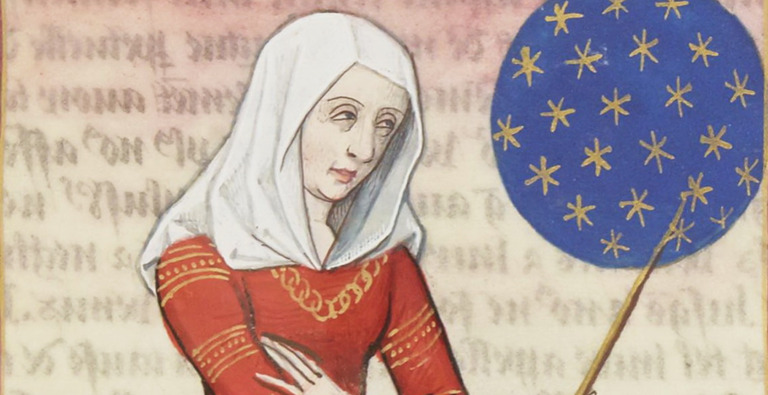
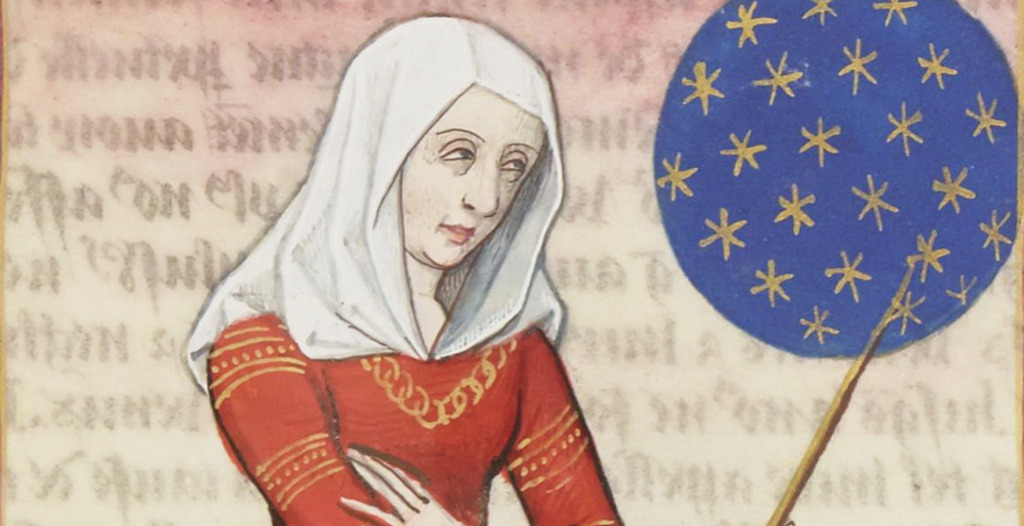
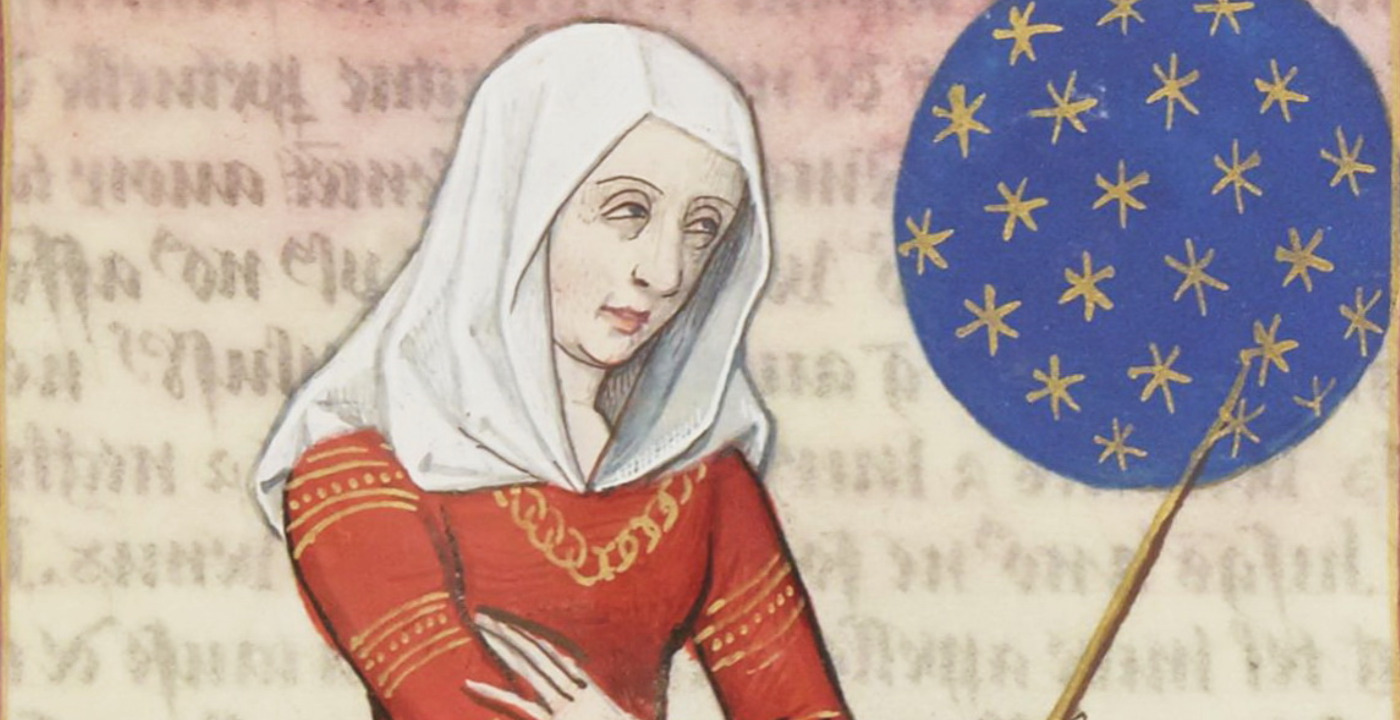
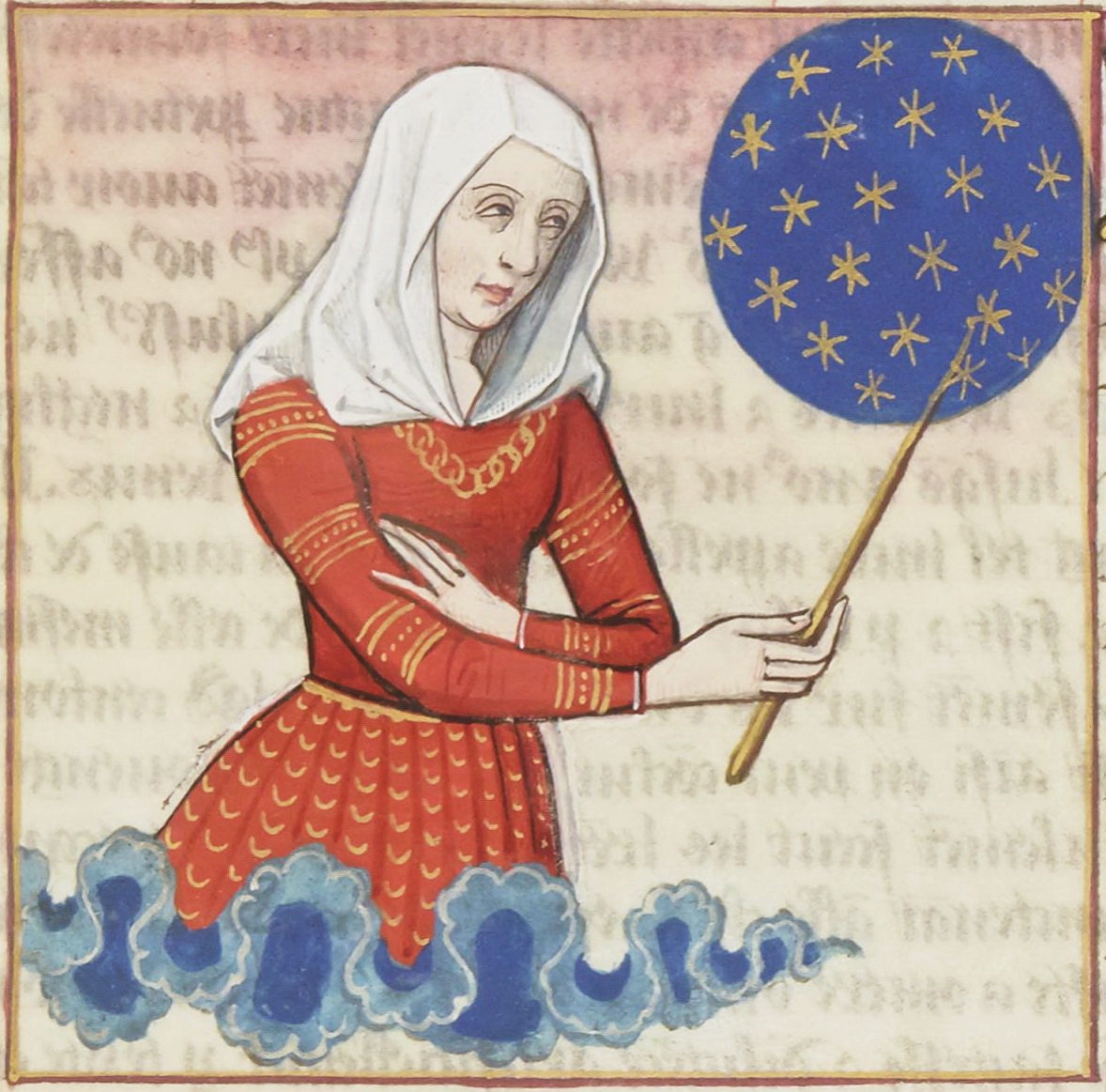
- Miniature from a 15th century manuscript of the De mulieribus claris by Giovanni Boccaccio, Bibliothèque Nationale de France, fra. 599 (15–16th c.) 83r
- = Boccaccio_-_Faltonia_Proba_-_
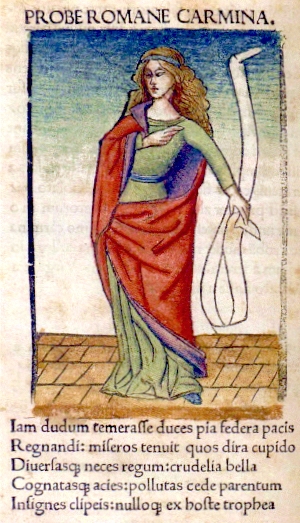
De_mulieribus_claris,_XV_ secolo_illuminated_manuscript. jpg - 2. Proba as a young lady holding a scroll
- stockholm, royal library, barbieri (1481) 31v
- File:CentoProbae.jpg - Wikimedia Commons
- https://commons.wikimedia.org/
wiki/File:CentoProbae.jpg
less
Photos
Publication date: Feb 9, 2026
Last updated: Feb 9, 2026
Comment
Your message was sent successfully