Birth
She was active c. 1180 BC, but details of her birth are lacking.
Death
Some time after c. 1180 BC.
Personal Information
Name(s)
Eritha

Date and place of birth
Eritha lived in or near Sphagianes, a cult site near Pylos in southwest Peloponnese. She was active c. 1180 BC, but details of her birth are lacking.
Date and place of death
Some time after c. 1180 BC.
Family
As a priestess in Mycenaean Greece, Eritha would have been a member of the local aristocracy.
Mother
No information found.
Father
No information found.
Marriage and Family Life
No information found. Although the Linear B tablets typically record women’s marital or child-bearing status, they do not do so for priestesses. This omission appears to be systematic, suggesting that a woman’s familial position was considered irrelevant or subordinate to her institutional role when she held a major cult office.
Education (short version)
Training in cult practice and supervision.
Education (longer version)
While no specific information about her education has been recorded in the sources, Eritha’s position as a high priestess means that she was trained in the cult practices and beliefs of her community. She directed other women, the priestesses' servants, and, as a landholder, supervised production on her land.
Religion
Eritha served as a priestess (i-je-re-ja) at Sphagianes, a religious centre dedicated to the female god Potnia, possibly the chief goddess of the Pylian pantheon.
Transformation(s)
Eritha’s prominence emerged within the rigidly stratified palatial society of Late Bronze Age Pylos, a culture in which religious institutions offered one of the few sanctioned avenues of authority available to women. Through her priestly office, she exercised economic autonomy, administered land, and supervised personnel—privileges otherwise reserved almost exclusively for men. Her most striking transformation was her appearance as a legal actor capable of challenging the damos, the local landholding community, over the tax status and classification of her property. This dispute, preserved in the longest surviving sentence of Mycenaean Greek and recorded only because the palace archives were baked hard in the destruction of Pylos around 1180 BC, reveals her readiness to assert both religious and personal prerogatives against civic authority.
Her claim that part of her land was held ‘for the god’ positions her as a defender of cultic rights within a system generally understood to constrain women’s economic agency. The conflict demonstrates how she navigated, and at times resisted, gendered limitations by strategically leveraging the institutional power of her priesthood. Her supervision of at least fourteen women and her capacity to initiate legal proceedings together mark a significant evolution in her role: from ritual specialist to a figure wielding meaningful political influence.
Contemporaneous Network(s)
Eritha operated within an elite religious milieu at Sphagianes, where she stood alongside another high-ranking priestess, Karpathia. Karpathia is identified in the tablets as the ke-ra-wi-po-ro, the ‘key-bearer,’ a title marking her as a senior temple official responsible for controlling access to sacred space and, likely, overseeing the formal presentation of offerings and prayers. Comparable duties are described for the priestess Theano in Iliad 6.296–312, suggesting that such responsibilities were integral to the role of a major cult functionary.
Within this same religious network, Eritha exercised notable authority over land distribution. She transferred a plot described as a ‘gift of honour’ to a woman named Huamia, designated a ‘servant of the god’ (PY Eb 416; PY Ep 704). In an agrarian society where land was the foundation of wealth, status, and political leverage, the ability to allocate property underscores the substantial institutional power attached to her office.
Eritha also supervised at least fourteen women identified as ‘servants of the priestess’ (PY Ae 303), indicating a sizeable household or cultic staff under her direction. Her administrative reach likely extended further, encompassing interactions with palace scribes, local landholders, and officials involved in her well-documented legal dispute (PY Ep 704). Additional tablets referring to ‘the priestess’ in connection with landholdings and enslaved individuals (Eb 339, Ed 317, En 609, Eo 224.8, Ep 539) may likewise pertain to Eritha, collectively portraying a figure whose religious authority was inseparable from significant economic and managerial responsibilities.
less
Significance
Works/Agency
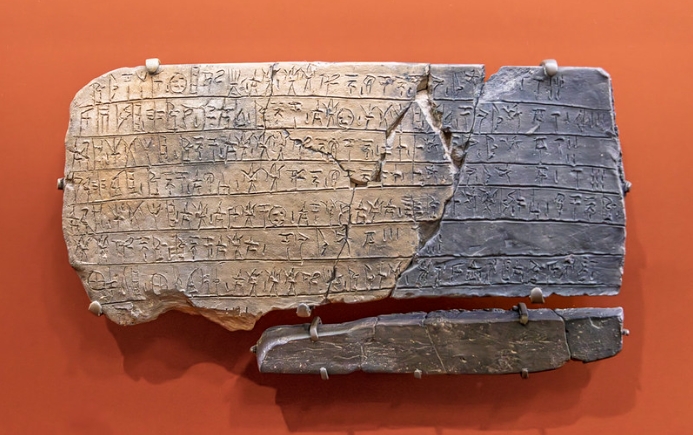
Eritha’s ‘works’ survive not as authored texts but through the administrative records that document the scope of her religious and economic authority. These tablets show her overseeing landholdings, directing personnel, and managing the distribution of religious offerings—including gold—functions that reveal the substantial institutional power attached to her office. Her most consequential attested act was the initiation of a legal claim concerning the tax status of part of her land, preserved on two Linear B tablets (PY Eb 297 and PY Ep 704). These documents constitute the earliest known legal dispute in Europe and offer rare evidence of a woman exercising formal institutional power within the Mycenaean world.
Her agency is further visible in her control over land, textiles, and personnel, and in her capacity to challenge the damos, the local landholding community. It is possible that she undertook her legal action on behalf of the sanctuary itself. When this is considered alongside the broader evidence for ‘the priestess’ (almost certainly Eritha) administering sanctuary property, a picture emerges of a woman occupying a leading religious position. She was likely the head of the sanctuary and her authority extended well beyond ritual performance into the realms of economic management and civic negotiation.
Contemporaneous Identifications
Eritha was identified as a priestess (i-je-re-ja) and a significant landholder at Sphagianes. She was also recognized as a supervisor of religious personnel.
Reputation
During her lifetime, Eritha was a prominent religious official, possibly of aristocratic or royal background. Modern scholarship views her as one of the most important women in the Linear B corpus. Her dispute with the damos has made her central to discussions of Mycenaean legal practice, women’s economic roles, and the relationship between religious and civic authority. Her reputation has grown posthumously due to the exceptional preservation of her legal case.
Legacy and Influence
Eritha’s legacy persists primarily in recent scholarship on Mycenaean society, gender, and law. Her case is frequently cited in studies of Bronze Age administration, women’s authority, and Linear B documentation.
less
Controversies
Eritha’s principal controversy is her legal dispute with the damos over whether her land was an etōnion (a tax-exempt religious land holding) or an onaton (a standard taxable allotment). The damos argued that her land was communal and taxable; Eritha claimed religious exemption. The palace appears not to have issued a ruling before its destruction around 1180 BC.
This dispute has generated scholarly debate about Mycenaean taxation, land tenure, and the autonomy of religious institutions.
New and Unfolding Information and/or Interpretations
Recent scholarship continues to reinterpret the nature of etōnion land, the authority of the damos, and the role of priestesses in Mycenaean administration. Some scholars argue that Eritha’s claim reflects significant economic independence for priests, personally or as representatives of their god, from centralized state control by the wanax (king) and palace; others suggest the dispute reveals tensions between local and palatial authority. No new archaeological discoveries concerning Eritha specifically have been reported.
less
Clusters & Search Terms
Current Identification(s)
Ancient history; Aegean Bronze Age studies; Mycenaean religion; women’s history; legal history.
Clusters
- Mycenaean and Greek Priestesses: Karpathia, Huamia, Kessandra, Lysimache.
- Bronze Age Women: Enheduanna; early Bronze Age woman found in Schleinbach near Vienna
Search Terms
Eritha; Mycenaean; Greek; priestess; Pylos; Sphagianes; Linear B; land dispute; Bronze Age; Potnia; religion
less
Bibliography
Sources
Primary (selected)
Linear B tablets PY Eb 297 and PY Ep 704.
Archival Resources (selected)
Lupack, Susan (2008). The Role of the Religious Sector in the Economy of Late Bronze Age Greece. BAR International Series. Vol. 1858. Oxford: Archaeopress. DOI:10.30861/9781407303413
Middleton, Guy D. (2023). Women in the Ancient Mediterranean World: From the Palaeolithic to the Byzantines. Cambridge University Press. doi:10.1017/9781108646529.014.
Olsen, Barbara A. (2014). Women in Mycenaean Greece: The Linear B Tablets from Pylos and Knossos. Hoboken: Taylor and Francis.
Web Resources (selected)
Issues with the Sources
All surviving evidence comes from Linear B tablets, which represent annual administrative records rather than narrative accounts. Their interpretation is complex due to limited context, scribal conventions, and the fragmentary nature of the corpus.
less
Photos
Publication date: Aug 6, 2026
Last updated: Aug 17, 2026
Comment
Your message was sent successfully