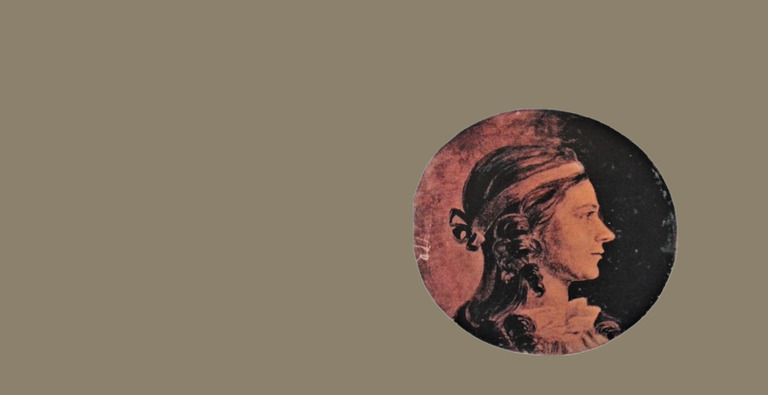
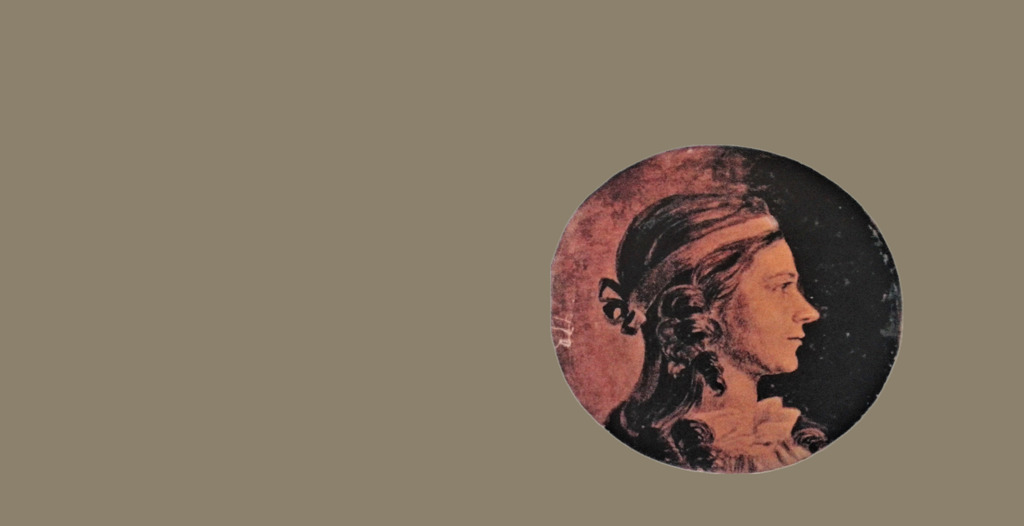
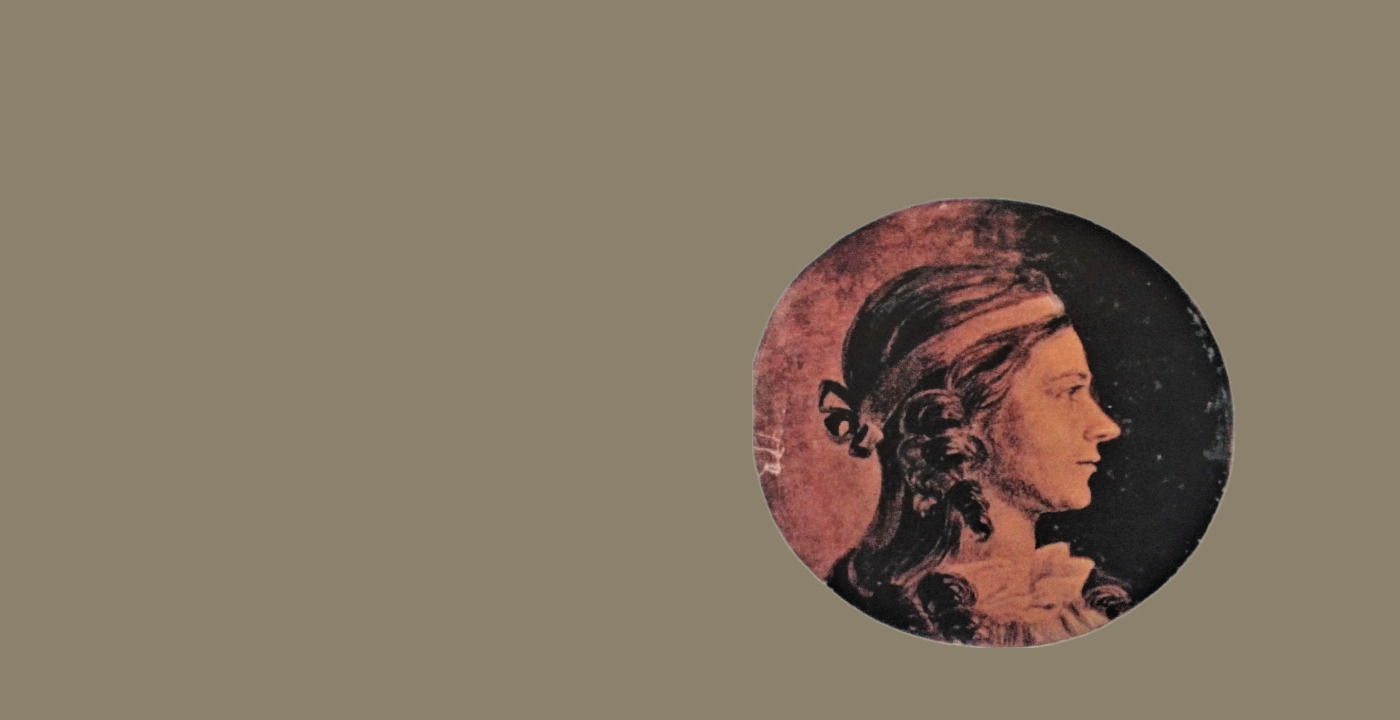
Birth
December 7th, 1769
Death
February 15th, 1848
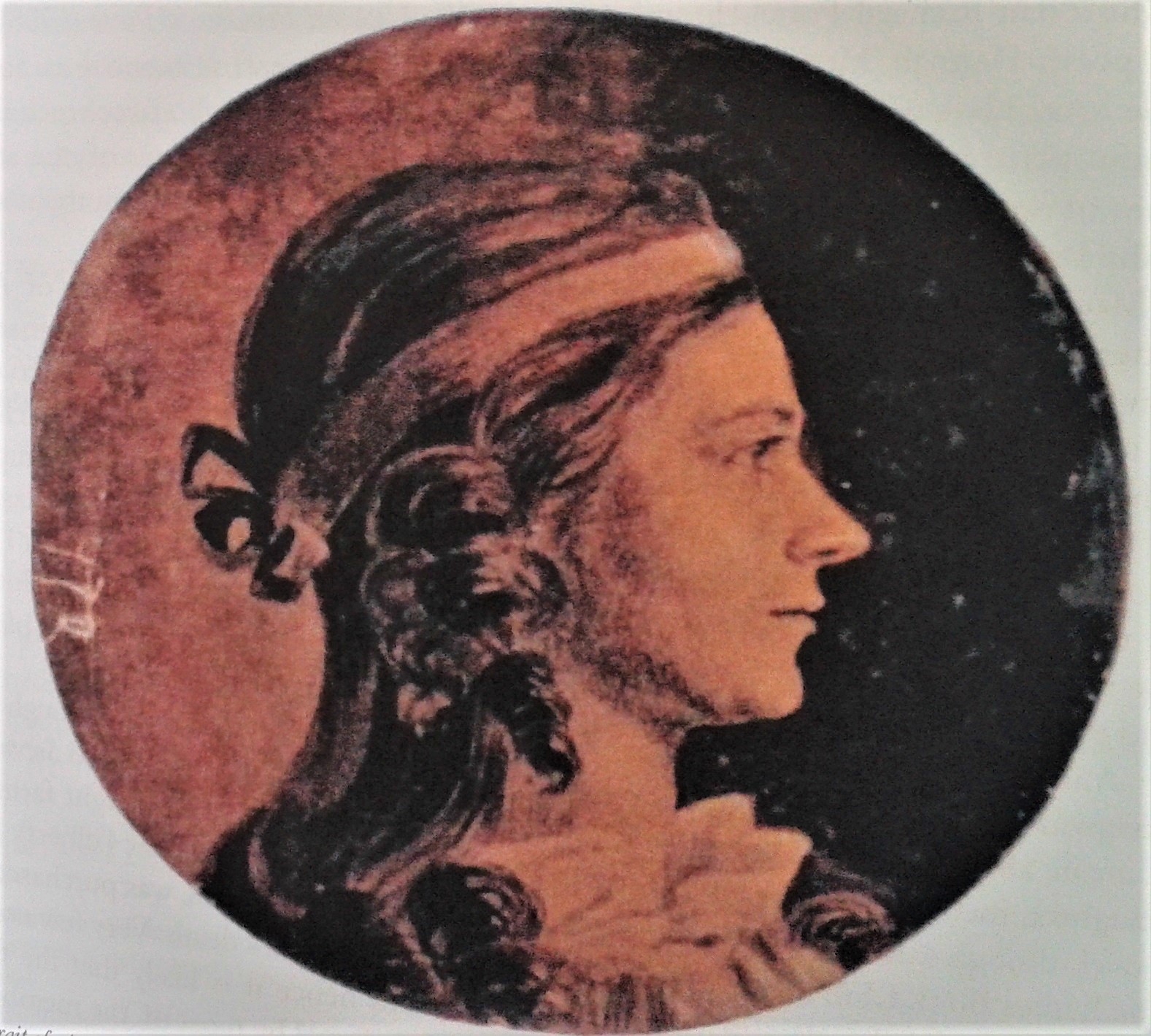
Ann Batten Cristall was an Anglophone British writer whose Poetical sketches was published in her own name—with a list of influential subscribers—by the radical publisher Joseph Johnson. It was an impressive and well reviewed London literary debut in March 1795. Poetical sketches has been the subject of fresh and recent literary scholarship.
If Ann Batten Cristall continued to write throughout the next half century, she chose to publish her later works anonymously or pseudonymously, or did not publish what she wrote. The rediscovery of more information related to Ann Batten Cristall’s biography has the potential to lead researchers to additional sources and any so far unidentified later works by her.
Personal Information
Name(s)
Ann Batten Cristall
Date and place of birth
Christened December 7, 1769, Penzance, Cornwall
Death and place of death
Buried February 15, 1848, St Mary, Lewisham, London. Aged 78, address Lewisham Hill
Family
Mother:
Elizabeth Batten (1735-1802) was the daughter of the Penzance merchant John Batten and his wife Ann Nichols. One of Elizabeth’s brothers, Reverend Joseph Batten, was an Independent minister and published poet.
Elizabeth Batten married the sea Captain Alexander Cristall in Penzance in April 1767. They lived in Alexander Cristall’s home on Swan Street, in the Minories at Aldgate in London, where they had three children in 1768-1771. These three children–Joshua Cristall (1768-1847), Ann Batten Cristall (1769-1848), and Elizabeth Cristall (1771-1853)–all developed a later interest in creative arts. Their mother Elizabeth Cristall returned to Penzance in 1769, where Ann Batten Cristall was born. Elizabeth gave her first daughter her mother’s name after the elder Ann Batten died in that year.
Elizabeth Cristall later received an inheritance for her own use, from her father, in 1792. This may have been allocated by her to support her children’s artistic training and endeavours, including publication of the Poetical sketches (1795).
Father:
Alexander Cristall (d. 1802) was born in Scotland in the early 1720s. Following the Jacobite uprising of the mid-1740s, Cristall, who was a mariner, moved to London. In January, 1754, he married Margaret Gordon in the ‘scotch church’ at Stepney. They had two children: Ann Cristall in 1755 and John Cristall in 1757.
During the Seven Years’ War Cristall commanded the privateer British Queen. The action in which Cristall’s ship was eventually captured and taken to St. Malo in May, 1762, lasted for six hours. Three of his ship’s crew were killed and five wounded; the British Queen had been returning to London from Guadalupe.
By the end of the war, Cristall was a widower with a six year-old son John Cristall. Cristall’s new ship the Hunter was initially sailed in the coastal trade between London and Penzance, and also called at Penzance when returning from the straits of Gibraltar. In April, 1767, Captain Alexander Cristall was described as of Aldgate in London when he married Elizabeth Batten in Penzance.
The Hunter ran aground on the Kent coast in 1770. Alexander Cristall decided to change occupation and established a mast, sail, and block-making business at Hanover Stairs in Rotherhithe, in a riverside yard which became known as ‘Cristall’s wharf’. By the early 1800s the Cristall family moved to live South of the Thames in Lewisham.
Two further sons, Joseph Cristall (1774-1850) and Alexander Cristall (d. 1848) were born. In 1774-1775 there were two christenings, both listed as of ‘Joseph.’ One was in Lewisham in 1774 and the other in Penzance in 1775. When the younger Alexander Cristall died in 1848 he was resident in the workhouse and listed in the burial register as ‘aged 81,’ most probably an estimated error.
John Cristall followed in his father’s footsteps and was a mariner who captained East India Company ships. Joseph and the younger Alexander Cristall worked alongside their father and later continued to occupy commercial premises in Rotherhithe where Joseph Cristall and his sons had a ship breaking business which was still operating in the 1850s.
In 1802, the elder Alexander Cristall’s will left half his property to his two daughters and half to his four sons. Alexander Cristall may have wanted to ensure ‘Nancy’ and Elizabeth’s independence from their brothers, given that his executor John was married with children and sailed long-distance routes, Joshua was pursuing an uncertain career as an artist, Joseph was already married with children, and Alexander may have intended to marry as he did in the year following his father’s death.
Marriage and Family Life
Throughout her life Ann Batten Cristall mostly shared her home and family life with some of her parental relations.
When Ann Batten Cristall was in her twenties, she had a love relationship with George Dyer (1755-1841). He was the politically radical, Cambridge educated, son of a London shipwright, a Baptist minister and published poet who earned his living partly by teaching a man whose background and interests combined elements that were also present in Ann Batten Cristall’s family. In her Poetical sketches (1795), Ann Batten Cristall’s concluding verse ‘Ode to truth’ was addressed to Dyer.
Many years later, Robert Southey was perplexed when Dyer confided in him about his former relationship with Ann Batten Cristall, whom Southey had met on the single occasion when Dyer introduced them. On two separate occasions, Dyer went out of his way to tell Southey the only reason he had not allowed his relationship with Ann Batten Cristall to develop further was ‘that he did not think it prudent to marry,’ confessing on the second occasion ‘that he was very sorry he did not marry Miss Cristall; but really it would have been exceedingly imprudent.’ In 1824, Dyer married, aged 69, to the widow Honour Mather (1761-1861); it was his first marriage and he was her fourth husband.
Ann Batten Cristall was noted in William Godwin’s diary, in the letters of Mary Wollstonecraft, and by Dyer as present at social gatherings in London up to and including 1797. She was described by Dyer as writing for publication in 1799. She may have left London in the late 1790s or following her parents’ death in 1802.
Ann Batten Cristall’s probate described her as formerly of Maidenhead Thicket in Berkshire; then of Haileybury in Hertfordshire; and lastly of Lewisham Hill, Blackheath. The last of these was where her parental family had lived from the 1770s. Aged 30 in 1799, Ann Batten Cristall may have taken a position as a family governess or school teacher in Berkshire, if she was not confident of earning her future income as a writer. From 1802, Alexander Cristall’s legacies were probably sufficient for his daughters to live on without paid work. Both women later described themselves in censuses as of independent means.
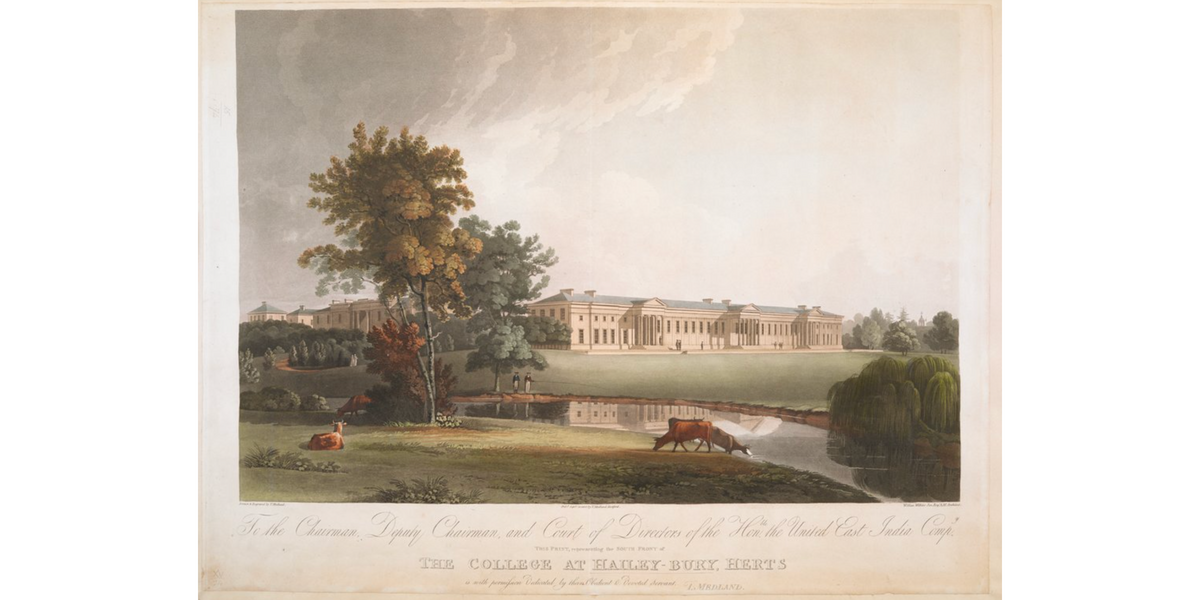
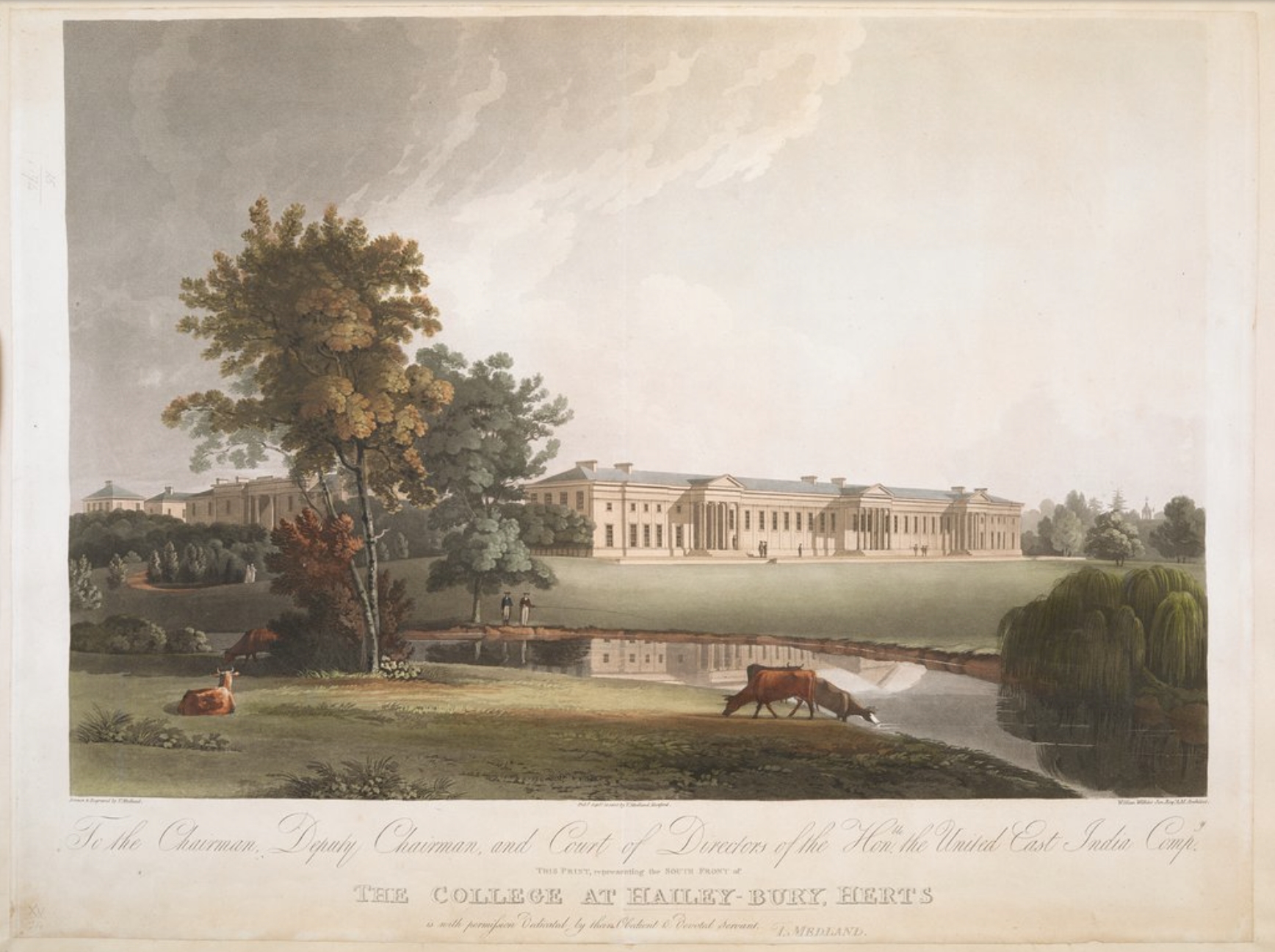
From 1806, Ann Batten Cristall’s cousin Reverend Joseph Hallett Batten was employed at Haileybury College, initially as a professor of classics in 1806-1815, and then as principal in 1815-1837. Many future senior officials of Britain’s expanding empire were trained at the East India Company College in Haileybury which opened in 1806; the College stood in open countryside and on landscaped grounds designed by Humphry Repton. Haileybury College was an intellectual and cultural community organised like an Oxford or Cambridge college. Before being appointed as a professor at Haileybury College, Joseph Hallett Batten had been elected as a Cambridge fellow. During his time at Haileybury College, Joseph Hallett Batten was made a Doctor of Divinity by royal mandate and was elected as a Fellow of the Royal Society. The professors at Haileybury College were specialists in their subjects which included non-European languages, classics, history and political economy, and some arts. Some professors combined teaching at the College with substantial intellectual or creative output. The drawing tutor Thomas Medland was an engraver and watercolourist who produced prints, including pictures of Haileybury, and exhibited at the Royal Academy. All of the students, teachers, and administrative staff of the College were men; only their family households and the College’s domestic staff included women.
By the 1830s, the teaching staff at Haileybury included individuals with an interest in the potential of descriptive economic and social sciences and their application to policy and administration. The population theorist Thomas Malthus taught there; he invited Harriet Martineau to visit Haileybury College, where she found the prolific contributor to and later editor of the Edinburgh Review; William Empson was also a professor. Aged in her early thirties, Harriet Martineau found the College congenial and her visit to Thomas Malthus and his wife was the first of several she made there. Recalling her first stay at Haileybury College in her autobiography written over forty years later, Martineau described an institutional environment which in August combined the rural recreations, ‘summer evening parties,’ and domestic services of a country house with tranquil time to work and study:
the families of the other professors made up a very pleasant society ... every facility was indeed afforded for my work. My room was a large and airy one with a bay window and a charming view; and the window side of the room was fitted up with all completeness with desk, books, and everything I could possibly want ... Almost daily we went forth when work was done – a pleasant riding party of five or six. This working environment was not open to women in universities at that time.
At Haileybury, Ann Batten Cristall likely lived with her cousin’s family and may have done so for almost three decades. Joseph Hallett Batten and his family initially occupied half of the ‘old manor house’ at Haileybury and then lived in the Principal’s house. Batten was married to Catherine Maxwell who had been born in Quebec to parents who were Scots; the Battens had five sons and five daughters. Their sons were educated at boarding schools and went to university; four later entered the employment of the East India Company. Ann would have been an adult female companion for Catherine Batten, as well as at College social gatherings, and may have assisted with the education at home of the Battens’ children, the youngest of whom was aged ten when his father died.
After leaving Haileybury, Ann lived on Lewisham Hill with her sister Elizabeth to whom Ann bequeathed her estate a decade later. The censuses did not list any school pupils or domestic servants as resident in the Cristalls’ household, which was adjacent to a school. This suggests that the sisters managed their own domestic requirements at home and were not employed.
Ann Batten Cristall did not marry. If Dyer regretted that he had not developed his relationship with Ann he might have contacted her and told her himself. She was living in Lewisham when Dyer made his regret known to Southey. At that time, due to limited vision, Dyer was writing his life story by dictation. This was not published as Dyer intended. Any manuscript created by the listener or listeners is not extant, except for brief mention and excerpts included in his obituary in the Gentleman’s Magazine (1841). This might have been read by Ann Batten Cristall, and obviously did not include the personal regret that Dyer voiced to Southey.
Ann Batten Cristall’s known employment, finances, and family responsibilities would not have prevented her from completing later works if she had chosen to do so, whether or not she then also chose to have these privately printed or published.
Transformation(s)
The ending of the relationship between Ann Batten Cristall and Dyer may have led her to reconsider her willingness to candidly publish works in her own name that revealed her feelings for another named person. Dyer’s suggestion that Ann Batten Cristall and Mary Hays collaborate to write a novel in verse may have been sincerely meant. Nonetheless, Hays’ novel Emma Courtney (1796) received a mixed reception because it told the story of a woman whose love for a man was not reciprocated, and Hays had an intermittent affair with William Frend who then married another person.
Contemporaneous Network(s)
Ann Batten Cristall’s Poetical sketches appeared with a list of influential subscribers. These included John Aikin, who shortly afterwards became the first editor of the Monthly magazine; the writer Amelia Alderson who married the Cornish painter John Opie in May 1798; the poet and abolitionist Anna Barbauld; George Dyer; the writer Mary Hays; the writer and political reformer Ann Jebb; the poet Samuel Rogers; Dr John Wolcot, best known as the writer Peter Pindar, who had fostered and promoted John Opie as an artist in Cornwall and London; and Mary Wollstonecraft and her sister Everina who was a friend of Ann Batten Cristall. Some residents of Penzance also subscribed.
The volume of verses by the new writer was welcomed and reviewed in 1795 in the Analytical Review, British Critic, Critical Review, and New Annual Register. In the following year the Monthly Review published a more critical review.
less
Significance
Works/Agency
Ann Batten Cristall’s Poetical sketches was published by Joseph Johnson in March 1795.
Excerpt from Poetical sketches:
Verses Written In The Spring, pp. 59-61
FROM yon fair hill, whose woody crest
The mantling hand of spring has dress'd,
Where gales imbibe the May-perfume,
And strew the blushing almond's bloom,
I view the verdant plains below,
And lucid streams which gently flow;
The opening foliage, drench'd with showers,
Weeps o'er the odorous vernal flowers;
And while before my temper'd eye
From glancing clouds swift shadows fly,
While nature seems serene and bless'd,
And inward concord tunes my breast,
I sigh for those by fortune cross'd,
Whose souls to Nature's charms are lost.
Whether by love of wealth betray'd,
Absorb'd in all the arts of trade,
Or deep engross'd in mighty schemes,
Toss'd in ambition's empty dreams,
Or proud amid the learned schools,
Stiffen'd by dull pedantic rules,
Or those who ne'er from forms depart,
The slaves of fashion and of art.
O! lost to bliss! the pregnant air,
The rising sun, the ripening year,
The embrios that on every bush
'Midst the wild notes of songsters blush;
The violet's scent, the varying hues
Which morn's light ray strikes 'mid the dews,
To them are lost -- Involv'd in care,
They cannot feel, they cannot share.
I grieve, when round I cast my eyes,
And feel a thousand pleasures rise,
That this fair earth, by Heaven bestow'd,
(Which human fury stains with blood)
Should teem with joys which reach the heart,
And man be thus absorb'd in art.
less
Controversies
New and Unfolding Information and/or Interpretations
The rediscovery of more information related to Ann Batten Cristall’s biography has the potential to lead researchers to additional sources and any so far unidentified later works by her.
less
Bibliography
Primary (selected):
Jordan, Alec. 2023. ‘Ann Batten Cristall’, in The Routledge companion to Romantic women writers, edited by Ann R. Hawkins, Catherine S. Blackwell, and E. Leigh Bonds.
MacKenzie, Charlotte. 2020. Women writers and Georgian Cornwall.
Cristall, Ann Batten. 1795. Poetical sketches.
less
Photos
Publication date: Feb 12, 2025
Last updated: May 24, 2026
Comment
Your message was sent successfully