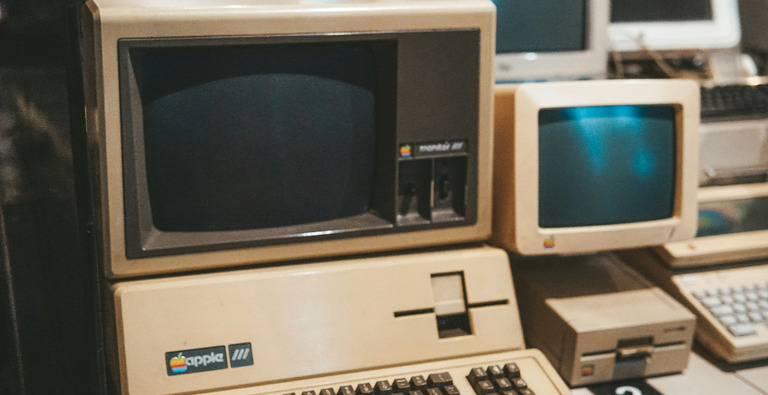
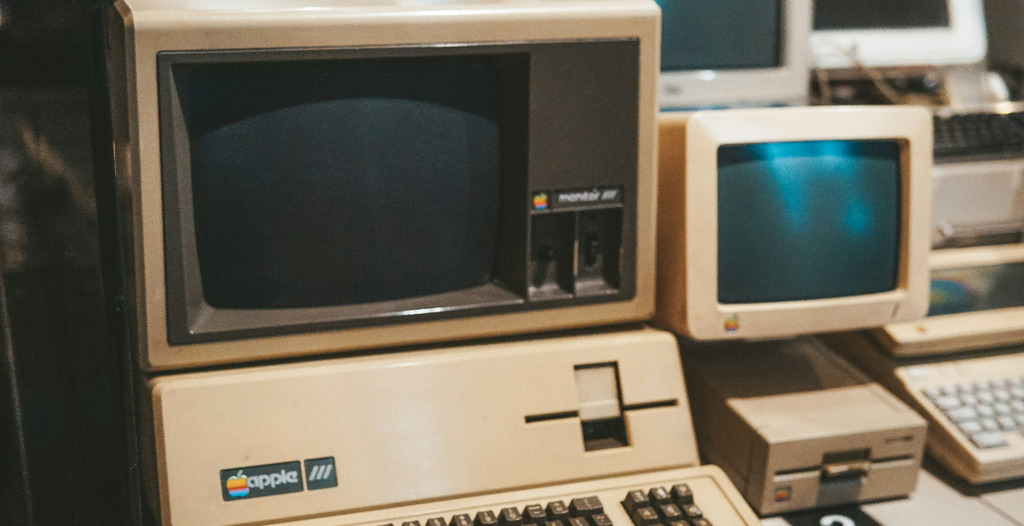
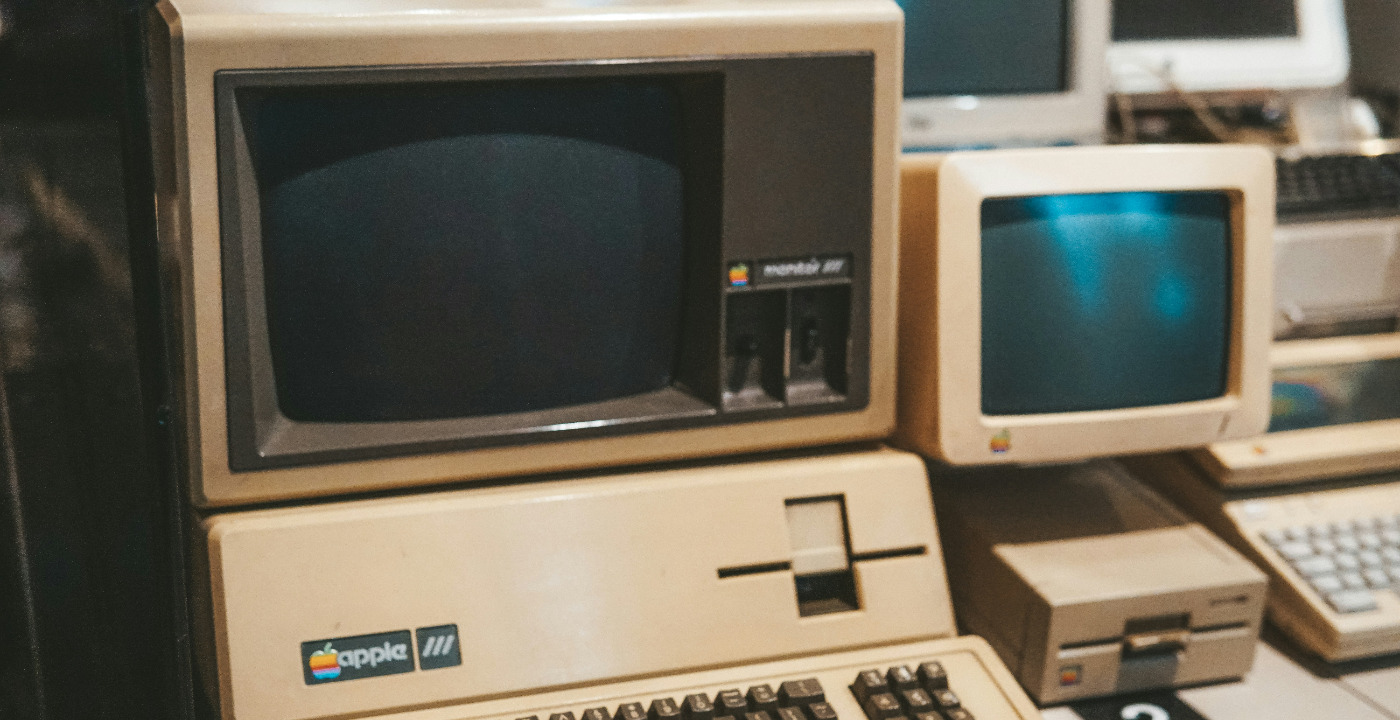
“I can’t type. I don’t take dictations. I won’t sharpen pencils. I can’t file. My boss calls me indispensable.” These are the opening lines of an early 1960s Xerox commercial. The actress, a bouffant-adorned secretary named “Miss Jones” applies mascara as she addresses the camera in a Monroe-esque cadence. She is coded as ornamental. Her theatrical ineptitude emphasizes the revolutionary ease of the Xerox machine.
Gender is weaponized at the dawn of this new technology; the Xerox machine is presented as the true laborer. Miss Jones’s eroticized body, by contrast, merely frames the invention within modernity. Her ‘indispensable’ qualities are not presented as intellectual—they are a coquettish grin, a swoop of hair, a gaze. Masculinized innovation and an unremitting objectification of the female body persist in the contemporary age, specifically through the vast impact of Artificial Intelligence. Technological advancement need not be this way. And yet it is.

The reduction of women’s authority amid alleged ‘tech-neutrality’ exists coiled, serpent-like, within contemporary culture. This deeply intertwined exchange of gender and technology is reflected in Technofeminist Judy Wajcman’s position, which is that tools and machines are endowed with sociocultural, gendered meaning.1 Much like the Xerox advertisement’s approach, 21st-century women are frequently stereotyped through gendered biases that emerge from male-centric data training. For instance, when asked to "visualize a workplace boss” versus "visualize a secretary,” the prominent AI program ChatGPT responded with a male for the former and a female for the latter. He is white, his brow furrowed—outlines of brutalist skyscrapers loom behind him. She is also white, but instead, smiles with deference. A potted plant lingers passively in the background.
Misogyny continues to haunt the narrative. Spectral distortions of deeply ingrained constructions of women as sexualized and submissive objects are not dismantled by new technologies, but instead amplified through them—alleged neutrality obscures their impact.
The consequences of AI misogyny extend beyond impersonal, yet deeply flawed, depictions of womanhood. Women are seventeen times more likely to experience online abuse, as AI technology poses increasingly nefarious dangers.2
The nonphysical nature of online abuse, specifically towards women, has led to a lack of proper legislative and regulatory systems, perpetuating the misogynistic frameworks preexisting within the justice system.3 Further, court systems frequently discriminate against victims of deepfake abuse and “revenge pornography.”
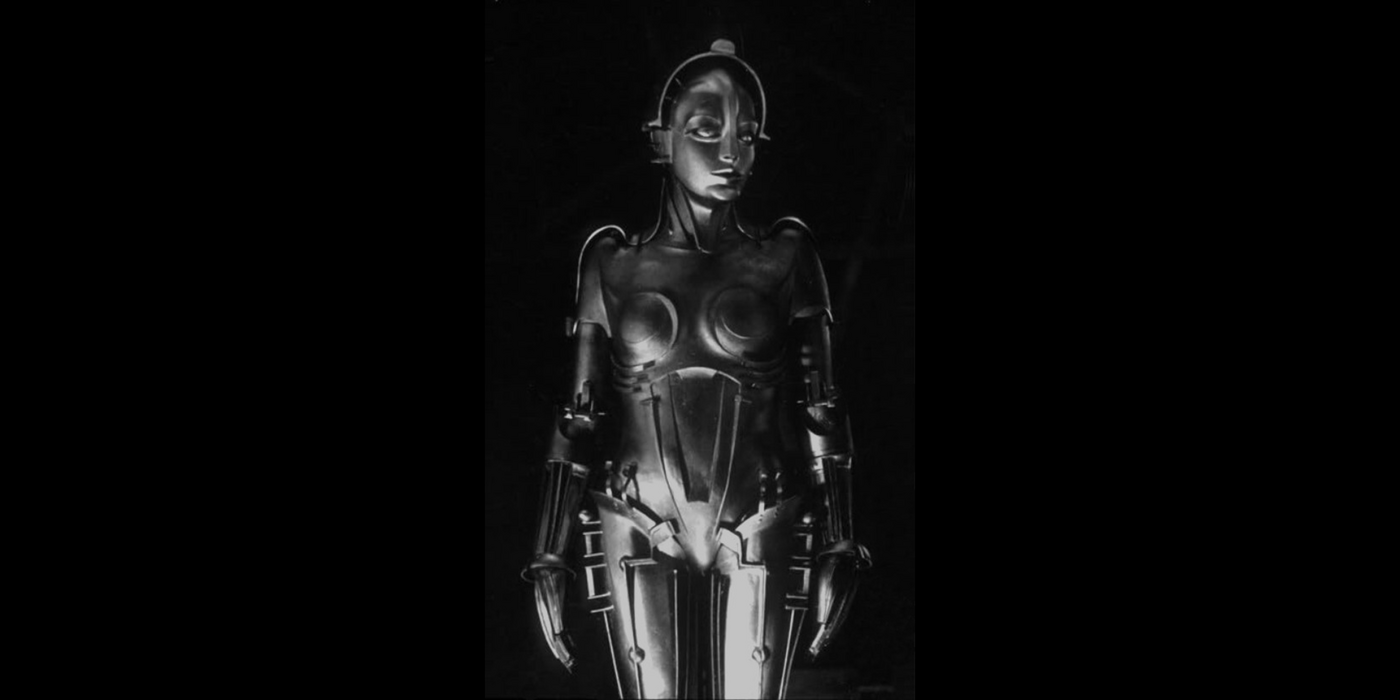
Author Laura Bates’s new book, The New Age of Sexism: How AI and Emerging Technologies Are Reinventing Misogyny (2025), examines how weak legal oversight of AI-related abuse enables the weaponization of technology against women. Nonconsensual, AI-generated deepfakes present girls and women in humiliating and grotesquely pornographic situations.4 Targets of deepfake abuse are celebrities and students, ex-partners and politicians—they are people from all walks of life and are overwhelmingly female (99%, according to a recent survey).5 Troubling objectification is also perpetuated through chatbots, where a man can use AI to create his ‘fantasy’ woman, customizing her physical attributes to his desire. In an increasingly adaptable iteration of the Gynoid trope, a term for a feminine humanoid robot first coined in 1979, technology and female sexuality merge, yet again, to satisfy the male gaze and sexual fantasies through AI chatbots.6 The only lacking attribute, Bates writes, is her “ability to say no.”
The persistence of technological misogyny throughout history extends beyond the digital into innovations that have comparably constrained women and are also rooted in the degradation of the female body.
There is, for instance, the archaic speculum, still widely used as a gynecological tool, with various iterations forced nonconsensually, without anesthesia, on enslaved women in the 1840s.7 As a symbol, the speculum signifies culturally-misogynistic characteristics: it is metallic, rigid, and invasive of the female body. Speculums are viewed as a medical default, no different than a stethoscope, despite being heavily rooted in technological gender and racial bias. Just as AI perpetuates virtual biases, the speculum demonstrates that the neutrality of technology is fictitious. Women have been continuously denied agency in shaping the mechanisms that impact their autonomy, reputation, and bodies. A deeply systemic problem persists, building upon the historical exploitation and objectification of women.
The voices and opinions of women, both historic and contemporary, must be illuminated when navigating technologies deeply inscribed with bias. During an era of continuing technological sexism, the women of The New Historia can be drawn upon for inspiration—those who innovated and persisted, even if they were not given a seat at the table.

Voices like Émilie Du Châtelet are needed: an 18th-century natural philosopher, mathematician, and physicist who wrote: “I feel the full weight of prejudice that excludes us [women] so universally from the sciences, this being one of the contradictions of this world, which has always astonished me, as there are great countries whose laws allow us to decide their destiny, but none where we are brought up to think.”8
A shift in the future of gendered traditions, where the encouragement of women as epistemological changemakers is embedded in sociocultural law, would provide frameworks to fight against contemporary and future technological injustices.
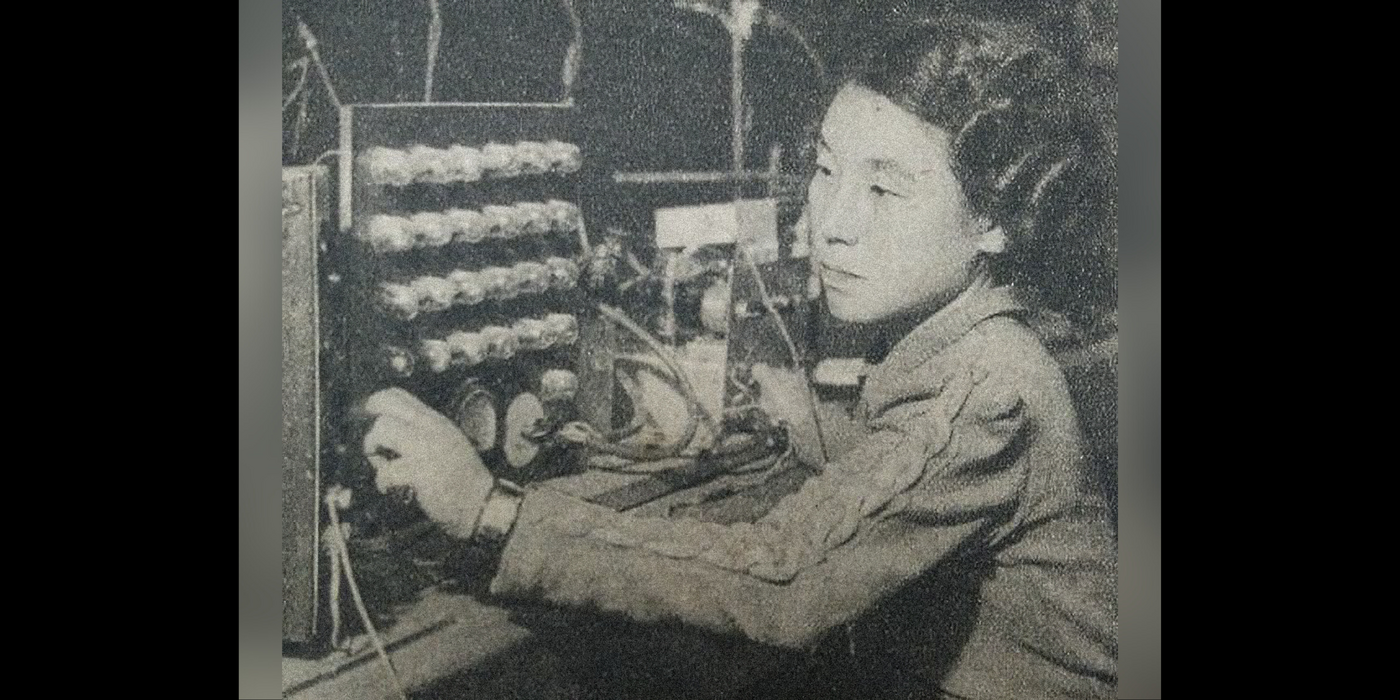
Minds like Toshiko Yuasa, Japan’s first female nuclear physicist, must be amplified as STEM continues shaping women’s lives. Yuasa’s groundbreaking work on radioactivity and her criticism of misogyny within scientific spheres, both in Japan and France, demonstrate how feminist intent can function within a woman’s innovative work. Yuasa’s position as a female scientist implicitly challenged patriarchal structures that sought to exclude women from scientific authority. As Artificial Intelligence’s impact is increasingly felt in women’s healthcare, at times demonstrating biomedical dataset biases through misdiagnosis, the persistence of women like Dr. June Dalziel Almedia, a Scottish virologist who shared groundbreaking innovations in diagnosis and viral innovations with the world, must be emulated. Dr. Almedia discovered the first Coronavirus in 1966, decades before the 2020 pandemic, working as a feminist MENSA member in a male-dominated medical field. One is left to wonder: how many women have been overlooked because of prejudice, their revolutionary innovations and discoveries lost in time?
Through a technofeminist lens, the theoretical futures of women can be imagined as hopeful, breaking from the shackles of biased technologies. Perhaps Miss Jones, the objectified secretary, starts a company of her own, becoming indispensable through training, hard work, and self-confidence. Perhaps the data training embedded within objectified AI chatbots—Gynoids categorized purely through their physical traits or eroticism—pivot to manifestations of their fictional achievements. A brighter future emerges if one reconceptualizes the relationship between the female body and the machine: where women expose coded biases, and reinvent them as sites of autonomy autonomy and authority.
Lena Bramsen recently graduated from The New School with a degree in Creative Writing and was a member of the Writing and Democracy Honors Program. Her work frequently sheds light on the eccentric and dissident aspects of womanhood. She is presently part of The New Historia team, contributing to the feminist historical recovery of women whose contributions to history and culture have been overlooked or misrepresented.
Bibliography:
4Bates, Laura. The New Age of Sexism: How AI and Emerging Technologies Are Reinventing Misogyny. Naperville, IL: Sourcebooks, 2025.
8Carus, Clara. “Émilie Du Châtelet.” The New Historia, May 16, 2024. https://thenewhistoria.org/schema/emilie-du-chatelet/.
6Historical Dictionary of Science Fiction: Gynoid, https://sfdictionary.com/view/2481/gynoid.
Kawashima, Keiko. “Toshiko Yuasa.” The New Historia, October 25, 2022. https://thenewhistoria.org/schema/toshiko-yuasa/
5Le, Emma, and Stephanie Choi. “99% of Nonconsensual Sexual Deepfakes Target Women and Girls. It’s Time for Congress to Act.” San Francisco Chronicle, September 8, 2025. https://www.sfchronicle.com/opinion/openforum/article/99-nonconsensual -sexual-deepfakes-target-women-21021885.php.
2, 3Nawaz, Amna, and Maea Lenei Buhre. “‘The New Age of Sexism’ Explores How Misogyny Is Replicated in AI and Emerging Tech.” PBS, September 10, 2025. https://www.pbs.org/ newshour/show/the-new-age-of-sexism-explores-how-misogyny-is-replicated-in-ai-and-e merging-tech.
7Shende, Priyal, Akshay Jagtap, and Bansari Goswami. “The Legacy of James Marion Sims: History Revisited.” Cureus, September 15, 2024. https://pmc.ncbi.nlm.nih.gov /articles/PMC11480236/.
1Wajcman, Judy. Feminism Confronts Technology. University Park, Pa: Pennsylvania State University Press, 1991.
Winter, George F. “Dr. June Dalziel Almedia.” The New Historia, October 25, 2022. https://thenewhistoria.org/schema/dr-june-dalziel-almeida/