In 1911, a twenty-six-year-old Russian-Jewish woman named Sabina Spielrein stood before the Vienna Psychoanalytic Society to present a radical idea: that sexuality and aggression were inseparably intertwined, that creation itself carried an impulse toward destruction. Her paper, Destruction as the Cause of Becoming, prefigured one of the most foundational concepts in psychoanalysis: the death drive.
Sigmund Freud sat in the audience.
Nine years after Spielrein’s presentation, Freud published Beyond the Pleasure Principle, introducing the concept of the death drive. He did acknowledge Spielrein’s influence—albeit in a brief, paternalistic footnote. Her work was “full of valuable matter and ideas,” he wrote, though “unfortunately not entirely clear” to him.
This pattern would repeat throughout her career.
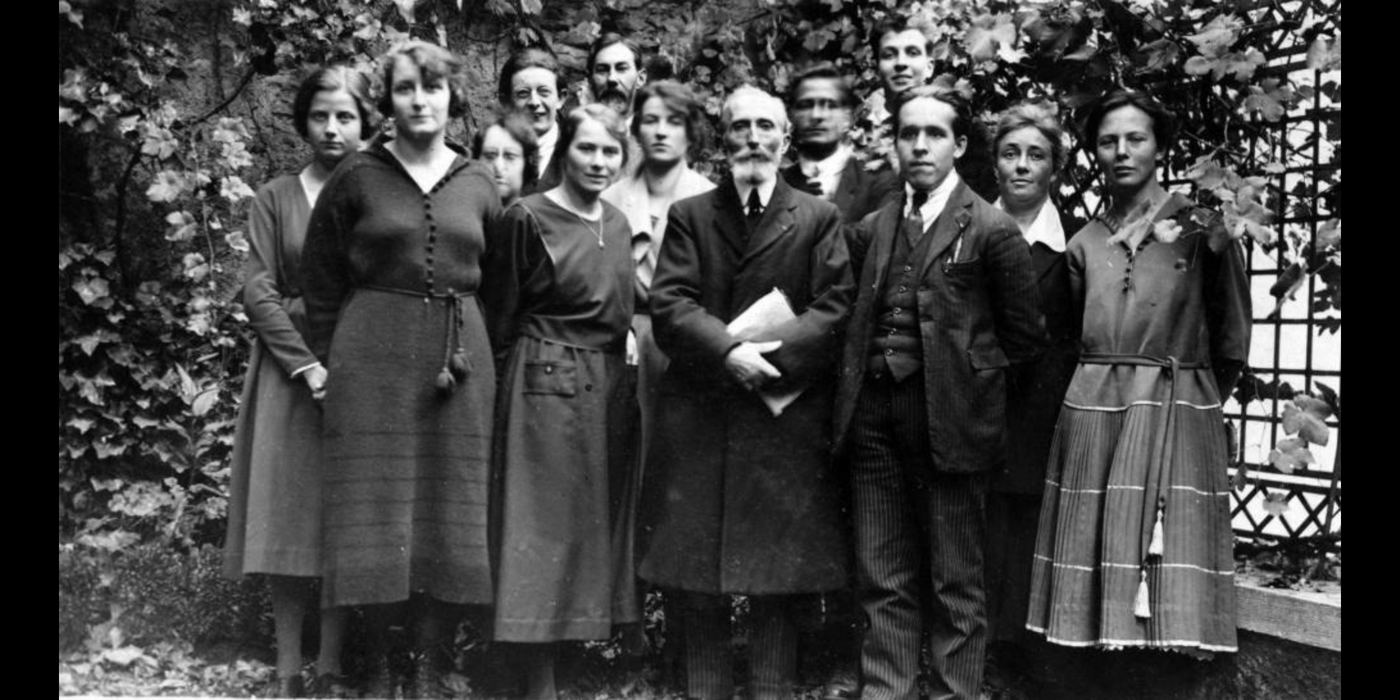
In 1920, at the International Psychoanalytic Congress in The Hague, Spielrein presented groundbreaking ideas about how bodily experience shapes early language development. In the audience sat Jean Piaget, Anna Freud, and Melanie Klein. Each would build influential theories on strikingly similar foundations.
Piaget—who had undergone analysis with Spielrein—developed his theory of cognitive development without acknowledging her influence. Anna Freud is credited as the founder of child psychoanalysis, though by 1922 Spielrein had already published eleven papers in the field. Melanie Klein elaborated theories of infantile splitting and ambivalence that closely echoed Spielrein’s earlier work, again without citation.
In Moscow, young Lev Vygotsky and Alexander Luria attended the Russian Psychoanalytic Society during Spielrein’s tenure as chair. Her ideas about thought, language, and social interaction were absorbed into what became cultural-historical psychology, without her name attached.
As a graduate student in clinical psychology, I learned extensively about each of these figures. Spielrein’s name appeared nowhere in my textbooks. When I finally encountered her work, I was astonished. Concepts and arguments I had learned as central to later developments—in psychoanalysis, child development, cultural psychology—were already there in her papers from the 1920s. So where was her name?
Spielrein’s path to that lecture hall in Vienna had begun years earlier at the Burghölzli psychiatric clinic in Zurich, where she arrived as a nineteen-year-old patient diagnosed with “hysteria.” Her physician was Carl Jung. What began as treatment evolved into intellectual collaboration, romantic entanglement, and ultimately her transformation from patient to pioneering analyst. Spielrein became one of the first women admitted to the Vienna Psychoanalytic Society, completed her medical degree, and published a doctoral dissertation on schizophrenia—among the earliest psychoanalytic dissertations ever written.
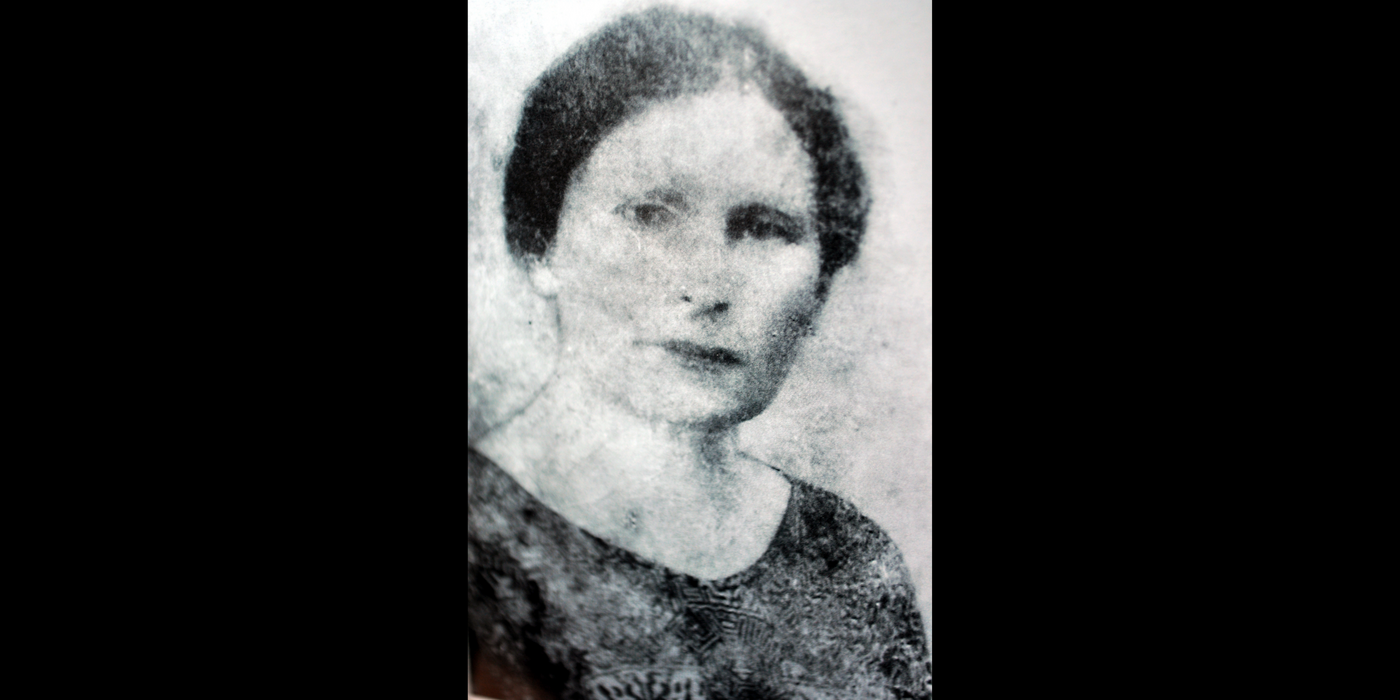
Far from working in obscurity, Spielrein enjoyed a successful and prominent career. Between 1911 and 1931, she published thirty-seven articles in German, French, and Russian in leading international journals. She moved through the epicenters of twentieth-century psychology—Zurich, Vienna, Berlin, Geneva, Moscow—holding leadership roles and lecturing to audiences that included the most influential theorists of her generation. They read her work, attended her talks, and built careers on foundations she had helped lay.
Today, when Spielrein is remembered at all, she appears as a footnote in Carl Jung’s biography: the troubled-if-brilliant former patient with whom he likely had an affair. In David Cronenberg’s 2011 film A Dangerous Method, Keira Knightley portrays Spielrein writhing on Jung’s couch, her intellectual contributions flattened in favor of romantic subplot. This is a particularly insidious form of historical amnesia: not erasure, but reduction to a supporting role in someone else’s story.
Her methods met a similar fate. Spielrein’s cross-disciplinary approach—integrating biology, mythology, philosophy, and women’s embodied experience—was dismissed by the Vienna psychoanalytic establishment as insufficiently scientific. She pioneered child analysis by observing her infant daughter and treating children’s play as meaningful psychological expression. These methods were criticized as too personal, too maternal—threatening the fiction that emotional involvement undermines scientific rigor.
Yet the point is not to discard the story of Spielrein as Jung’s troubled muse and replace it with a sanitized portrait of Spielrein the theorist. She was both.
Spielrein embodied generative contradictions. She was simultaneously patient and clinician, lover and theorist, mother and scientist. Rather than liabilities, these tensions were the source of her insight. Her experience of psychological suffering deepened her understanding of the psyche. Her observations of her own children revealed dimensions of development that laboratory abstraction missed. Her attention to women’s bodily experience and maternal ambivalence uncovered truths about human development that detached theorizing repeatedly overlooked. She grasped what we now call embodied cognition long before the term existed—not despite her personal involvement, but because of it.
Decades later, when developmental psychology and neuroscience began validating her claims about the role of the body in language and play, the field had forgotten her name.
Psychoanalysis has much to say about transformation, disavowal, and forgetting. What are we to make of the fact that psychoanalysis itself spent a century repressing Sabina Spielrein?
What made her dangerous was her refusal to accept a false choice between subjective involvement and objective knowledge. The patriarchal psychoanalytic establishment insisted that authority required detachment, that universality meant transcending particularity. Spielrein demonstrated otherwise. She understood that the concrete and the abstract work together: that the body shapes language, that play structures thought, that subjectivity can ground objectivity. These insights threatened the field’s epistemological assumptions, which is precisely why they had to be suppressed.
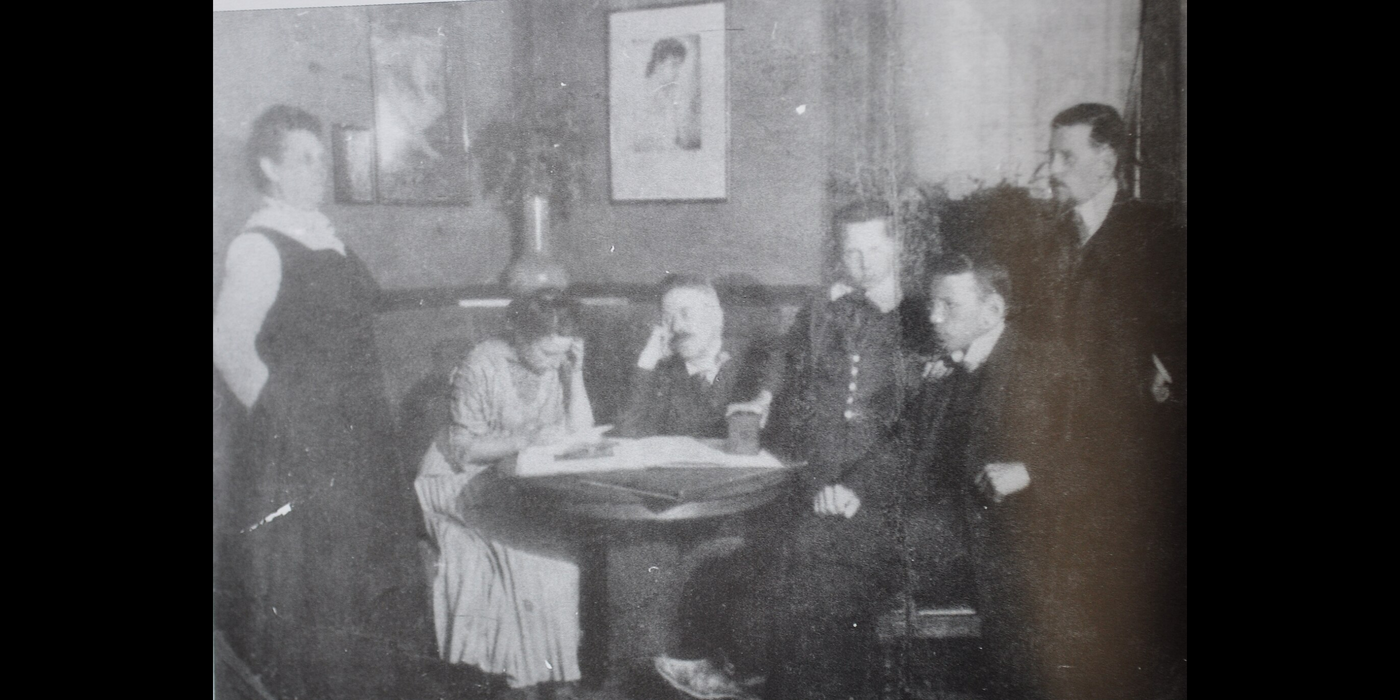
Her identity as a Russian-Jewish woman compounded this vulnerability. Stalin’s purges claimed her three brothers, all accomplished scientists. In August 1942, Nazi forces murdered Spielrein and her two daughters at Zmiyovskaya Balka—the “Ravine of the Snakes”—where approximately 27,000 Jews were killed.
The rediscovery of her diaries in Geneva in the 1970s could have prompted psychology to revise its intellectual history; instead, it fueled decades of speculation about her relationship with Jung.
Every psychology student who learns about Freud’s death drive, Piaget’s stages, or Vygotsky’s theories without encountering Spielrein's name is inheriting a distorted history. Contemporary neuroscience continues to affirm what she argued more than a century ago, yet the field is still catching up to insights it could have been building on for decades, had it been willing to acknowledge them as hers.
Sabina Spielrein deserves what male theorists receive as a matter of course: recognition as an intellectual force in her own right, sustained engagement with her ideas on their merits, honest acknowledgment of her influence—and the freedom to embody contradictions.
John Davis is a graduate student in Clinical-Counseling Psychology at Saint Michael’s College in Vermont. He received a BA in Liberal Arts from St. John’s College in Annapolis, Maryland. His research interests focus on intersections of Marxist theory and psychological science, particularly in the history of psychoanalysis and Vygotskian cultural-historical psychology.