March 2026
Dear Reader,
I am delighted to announce the launch of The New Historia's Emerging Voices page, which highlights the extraordinary work by students over the past several years in my undergraduate and graduate courses at The New School in New York City.
For fifty years, my intellectual and moral focus has been to discover, recover, and promote empirical evidence about the unknown lives, struggles, and production of new knowledge by women from prehistory to yesterday. To generate a factual chronology of women is to reveal who we have been and can become.
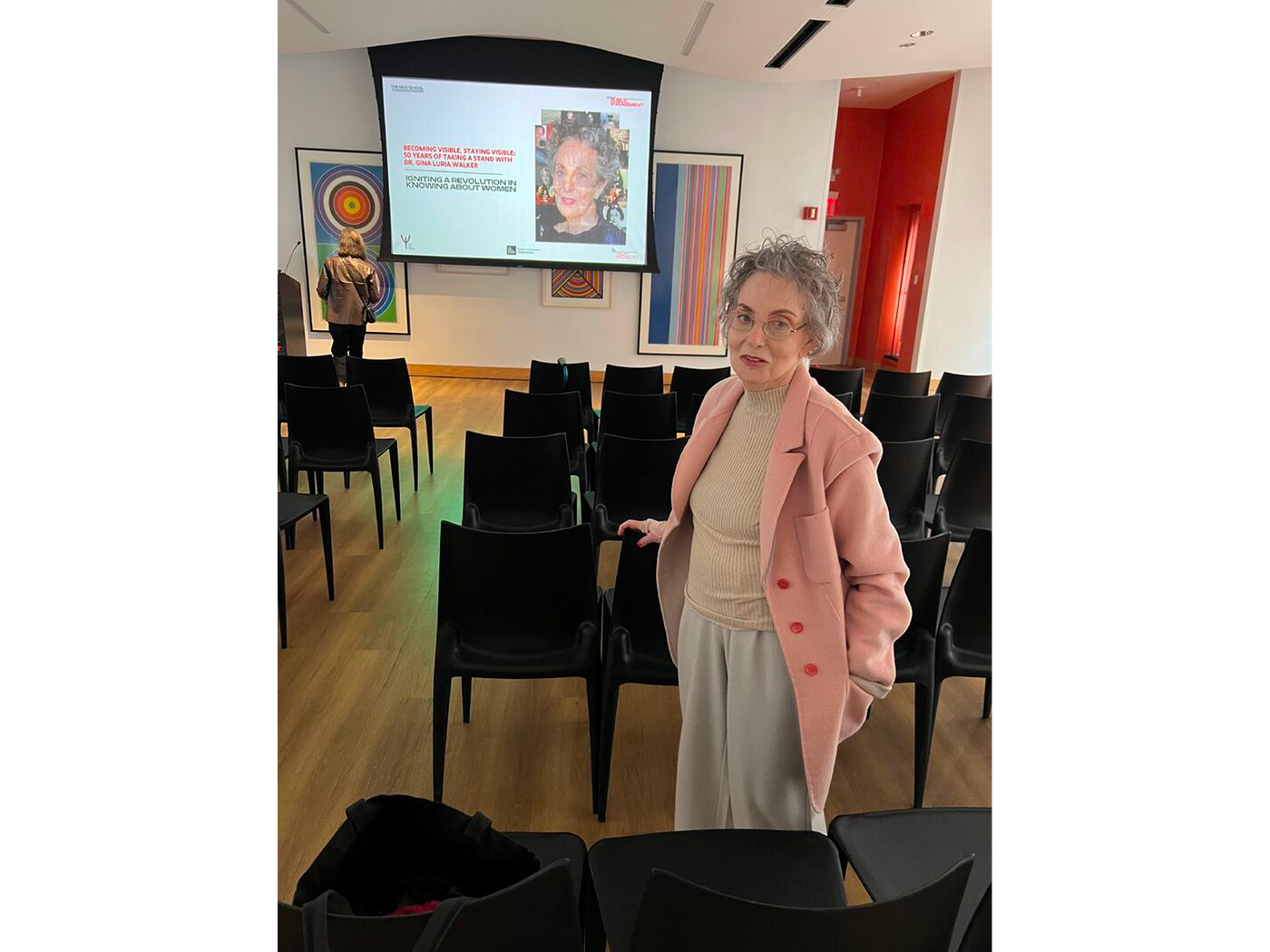
In the Introduction to Agnotology, The Study of Ignorance (Princeton, 2008) by Robert N. Proctor and Londa Schiebinger, Proctor provides an important definition of the term: “A key question, then, is: how should we regard the ‘missing matter,’ knowledge not yet known? Is science more like the progressive illumination of a well-defined box, or does darkness grow as fast as the light?” Proctor’s definition is central to The New Historia, which documents the presence of women from prehistory to yesterday by providing access to new knowledge that, at the same time, dramatically highlights the deliberate erasure of women from traditional History. I believe that The New Historia is now sparking a transformative revolution in our understanding of women, unveiling groundbreaking findings and their profound implications, which challenge our fundamental ignorance about ourselves and each other.
What I call “Feminist Historical Recovery” is a field of discovery in transition. Students bravely follow their hunches, leading them to include surprising categories and innovative contexts. Along the way, they encounter alternate paths to and away from canonical assumptions. They are frequently surprised to find experts in an established field who welcome their interest, respond to their questions, and inspire their original responses in their final projects.
Most importantly, students are encouraged to explore the sources of their deepest human connections and curiosities. Students have researched and explored a grandmother or grandfather, music, sports, adventure, fashion, language, aging, sexuality, and cultural appropriation, culminating in personal understandings that reflect and refract new versions of the human past and, therefore, the future. Students have trained in advanced technologies, including digital design, media, and video. They have delved into film, writing, philosophy, and history, and experimented with form and content in intriguing ways. Coupling the past with the present to glimpse the future has been a glorious teaching and learning experience.
Ignorance about women through time and around the globe now packs a terrific punch. Finding our foremothers has fueled the intellectual passions of scholars, including my own, for more than sixty years, as an increasing number of female graduate students insisted on investigating the women on whose unremembered shoulders we stand. What we found and passed on to our students and they to their students in the present, revealed the appalling public obliviousness to the female figures who were deliberately left out of History – a system of organizing information mostly by, for, and mainly about men. This exclusion perpetuates the absence of individuals and groups of women we can now appreciate the importance of recovering.
My students cooperated magnificently with me and each other in looking for and finding the "missing matter." Without recognizing what was happening, I began to evolve a new feminist pedagogy that the students tested, struggled with, and advanced. Jamer Hunt, Professor of Transdisciplinary Design at Parsons School of Design, who has been my professional partner in conceptualizing and realizing The New Historia website, was the first to call my attention to the praxis the students and I were forging in the classroom. Recently, he said to me, “There is a magic in The New Historia. You and your students can locate yourself in any place, at any time, no matter how remote or understudied, and suddenly you will populate it with female figures who document a story about life on earth that we didn’t know.”
I extend deep appreciation to The New Historia Team—Da Won Kim, Remie Arena, Lena Bramsen, Tata Jagiashvili, Katy Oakley—and the many students who taught me as I was teaching them. We move onward, because that is the only direction we want to go.
Onward,
Gina Luria Walker
Executive Director, The New Historia
View Emerging Voices projects here